


Bitcoin’s rebound above $63,000 is being helped by renewed ETF inflows, but the harder test will now be whether the liquidity beneath the move can absorb shock from rising leverage, funding pressure, or a sudden reversal in fund demand.
Data from CryptoSlate shows BTC trading around $61,500 as of press time, down 3.2% over the last 24 hours but up 2.8% over the past week. The price is just about sustaining Bitcoin’s recovery from late-June lows near $58,500, when weak ETF flows, rising exchange supply, and softer liquidity combined to pressure the market.
This now-fragile rebound has more support than it did during the June sell-off because ETF inflows have returned, even as rising futures activity makes the recovery more sensitive to market positioning.

ETF rebound gives price support
US spot Bitcoin ETFs drew more than $500 million across the last three trading sessions, giving Bitcoin its first back-to-back ETF inflow stretch since May.
The 12 funds took in $221.72 million on July 2, ending a 10-session outflow streak that had pulled about $2.73 billion from the products.
After the US Independence Day holiday, they added another $265.69 million on July 6, followed by a further $21 million in inflows on July 7, taking the three-session total to about $509 million.
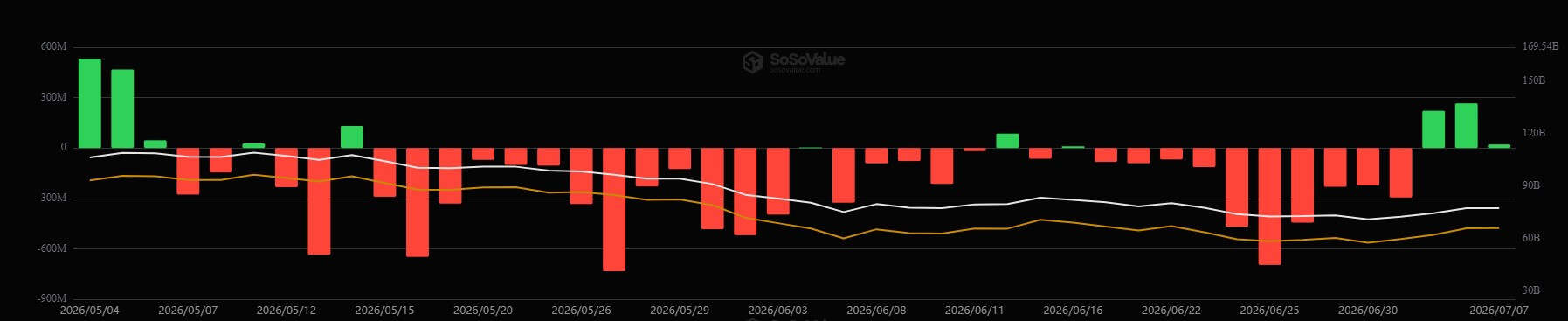
The return of ETF demand helped Bitcoin recover above $63,000 and provided traders with a stronger support signal, likely helping sustain the price above $60,000 after the late-June slide.
Spot Bitcoin ETFs have become one of the clearest channels for regulated demand, so a shift from persistent withdrawals to back-to-back inflows changes the near-term tone.
However, these inflows have not fully settled the demand question. Three positive sessions can relieve pressure, but they do not erase the earlier drawdown in fund demand or prove that the fresh spot buying is strong enough to absorb supply if market stress returns.
Leverage build-up puts market depth to test
The return of ETF inflows has improved Bitcoin’s near-term support, but the next test is forming in derivatives, where traders are rebuilding exposure faster than spot activity appears to be deepening.
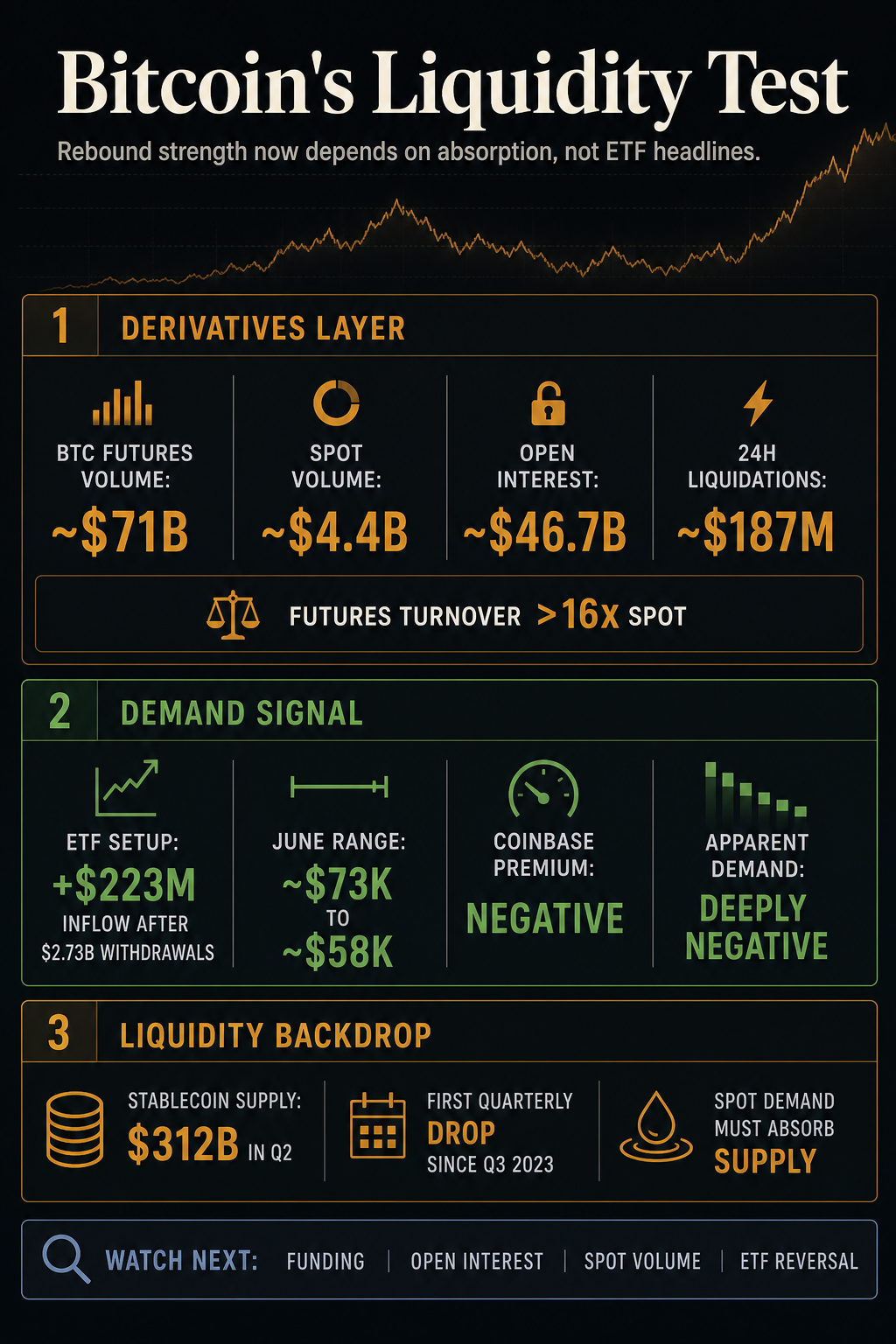
CoinGlass data show BTC futures volume climbed to about $78.9 billion over 24 hours, its strongest level in two weeks. Spot volume was roughly $4.36 billion over the same period.
Open interest has also risen by about $3 billion since June 28 to around $47 billion, indicating that traders are taking on more risk as Bitcoin recovers from the late-June sell-off.
Glassnode data point in the same direction. According to the firm, BTC futures open interest has expanded as long-side funding payments have climbed to $1.5 million, which is above the upper statistical band of $1.3 million.
That suggests bullish traders are paying a larger premium to maintain long exposure as positioning rebuilds. This build-up can help extend the rebound while momentum remains positive.
However, it can also leave the market more exposed when prices stall, because larger leveraged positions create greater pressure to unwind if funding costs rise, liquidity weakens, or ETF demand slows.
The pressure is not limited to derivatives. Bitcoin is still emerging from a June reset that pushed more coins toward exchanges and weakened the broader liquidity backdrop.
Recent CryptoSlate coverage showed about 49,000 BTC moved to exchanges during the selloff, raising the risk of additional supply hitting the market if price momentum fades.
At the same time, stablecoin supply fell to $312 billion in the second quarter, marking its first quarterly decline since the third quarter of 2023, reducing one of the main pools of capital supporting crypto risk-taking.
Together, those signals make the rebound look structurally fragile. Leverage can push Bitcoin higher in the short term, but weak spot demand, rising exchange supply, and softer stablecoin liquidity leave the market more vulnerable if volatility returns.

What will decide BTC’s next move?
The BTC funding rate is one gauge of whether Bitcoin’s rebound is becoming crowded in perpetual futures.
Funding is the balancing payment that keeps perpetual futures aligned with spot prices. A positive rate usually means demand for leveraged long exposure is stronger, while a negative rate means shorts are paying longs and can reflect heavier short positioning or hedging demand.
As of press time, CoinGlass shows BTC’s real-time funding rate at 0.004039%, meaning traders holding long perpetual positions are paying shorts during the current funding interval.
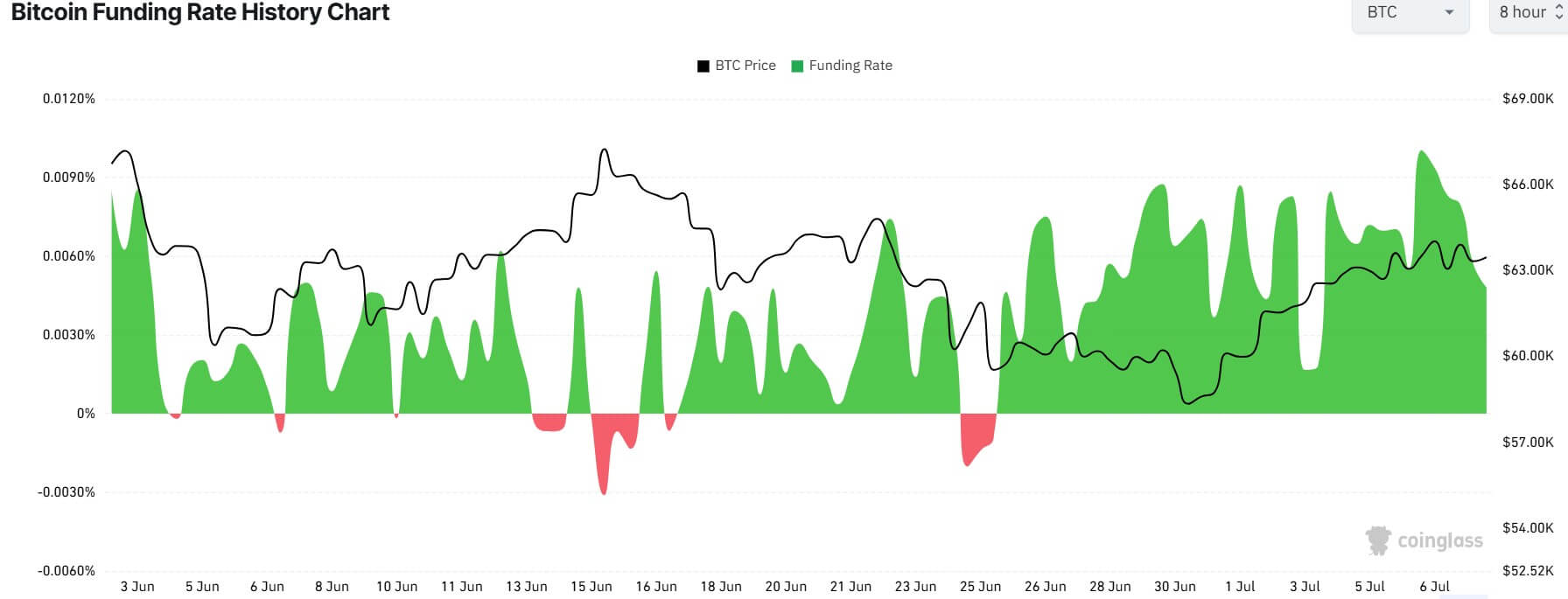
The current rate matters because it is rising alongside higher open interest and heavier futures activity. The risk would build if traders keep paying more to stay long while ETF inflows slow or spot demand fails to strengthen.
A healthier BTC price rebound would require ETF inflows to persist beyond the latest three-session stretch, funding to stay contained as open interest rebuilds, and spot volume to carry more of the advance. If that happens, Bitcoin’s recovery would have a stronger demand base.

If that does not happen, the market will have less room for disappointment. Softer ETF flows, a funding reset, or another wave of forced selling could hit a market where leveraged traders have already priced in more strength than spot demand has yet to confirm.
The next leg will depend on whether fresh capital continues to absorb supply as leveraged exposure grows and volatility risk returns.


