

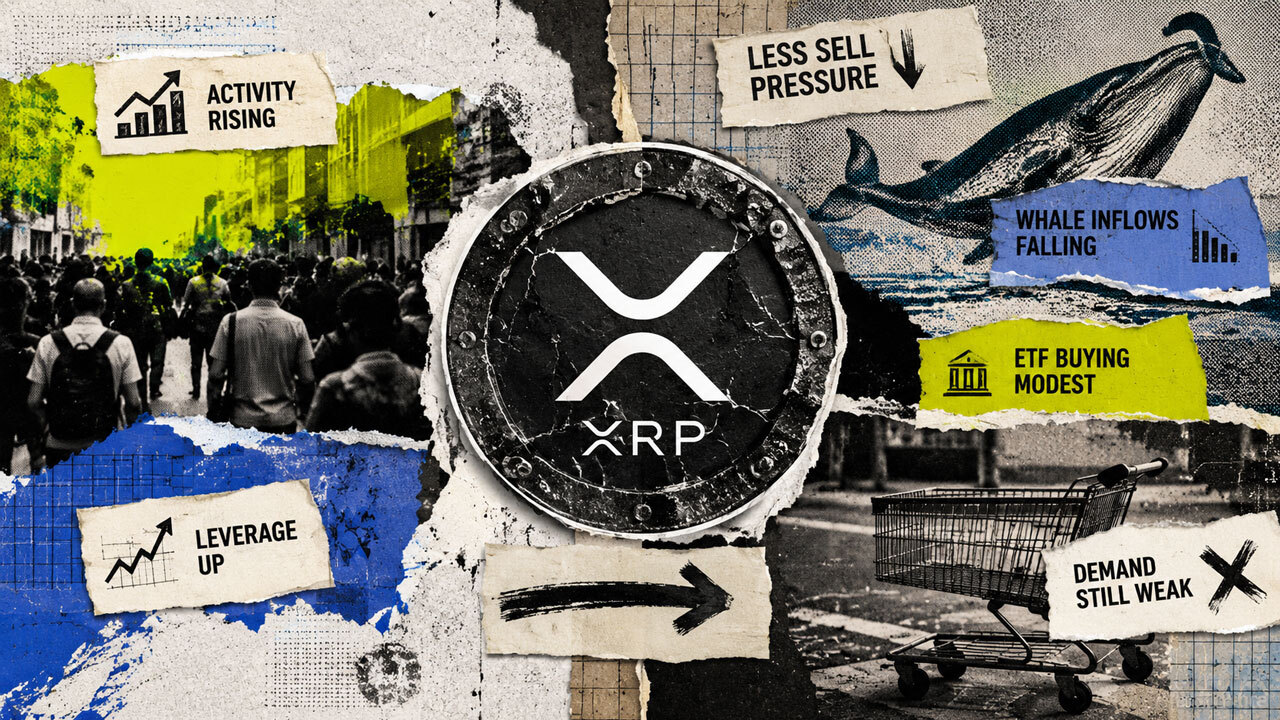
XRP is back near $1 even as network activity rebounds, whale deposits to Binance collapse, and derivatives exposure builds near recent lows.
The token fell to about $0.98 this week before recovering toward $1, according to CryptoSlate data, extending a retreat that has erased much of its May rally. Crowd commentary around XRP simultaneously reached its most bearish level in three months across X, Reddit, Telegram, and other crypto channels tracked by Santiment.
Beneath that price weakness, several parts of the market have strengthened. More addresses are using the XRP Ledger (XRPL), large holders are moving less XRP onto Binance, and traders are adding leveraged exposure.
Yet, fresh investment demand has moved in the opposite direction, while growth in parts of XRPL’s user base has outpaced the capital and transaction value accompanying it.
XRPL participation broadens as capital depth lags
XRPL activity has returned to its May peak even though XRP is trading roughly 35% below the price reached during that earlier surge.
The network logged 49,929 active addresses during a 24-hour period this week, its highest level in more than two months and about 3% above the 48,453 recorded when XRP traded above $1.54 in May.
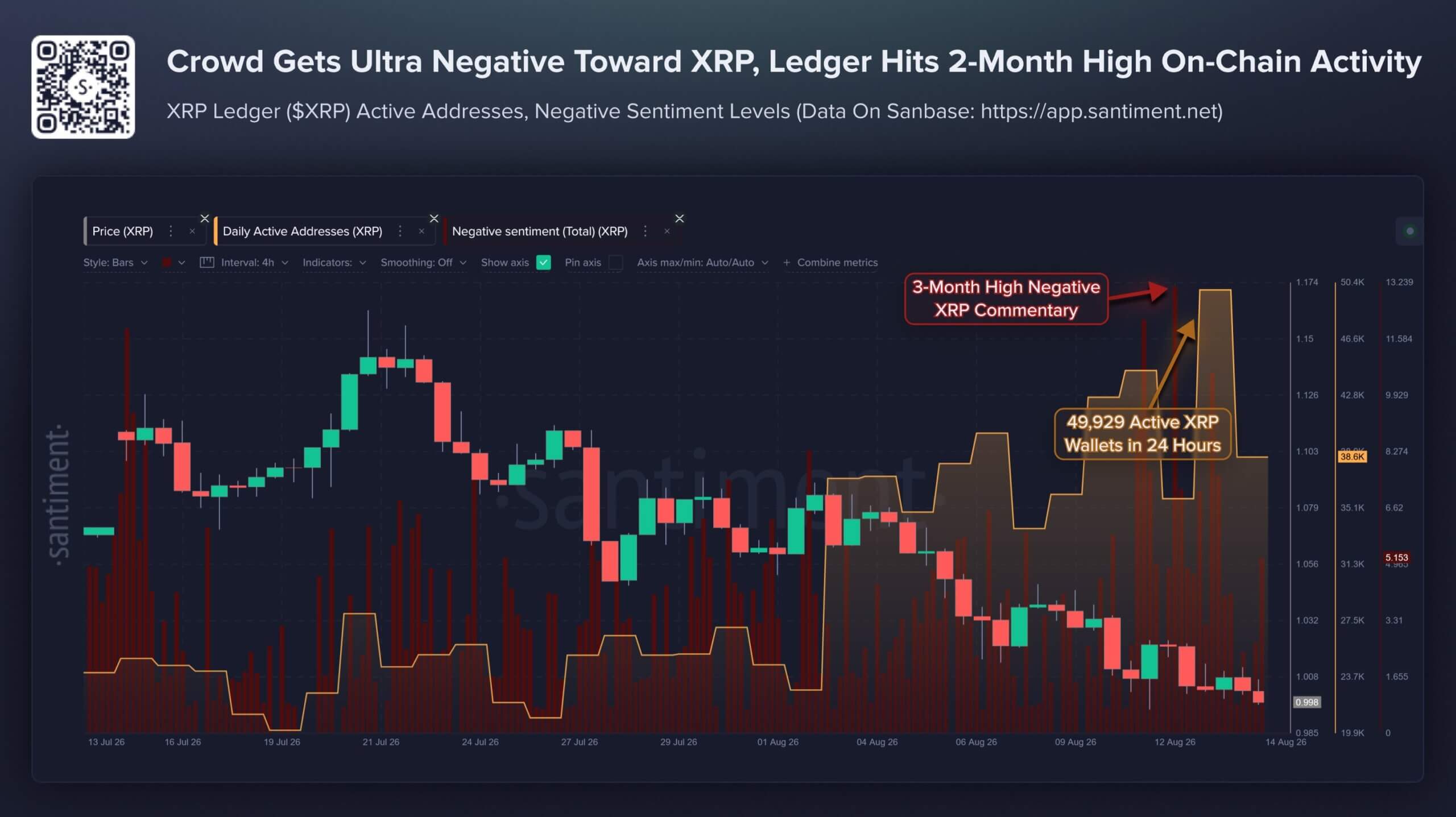
The backdrop is markedly different this time. Santiment linked part of the May increase to enthusiasm around XRP’s price breakout. The latest surge followed weeks of weaker price action, including a drop below $1, while social sentiment deteriorated to a three-month low.
May also showed how quickly those gains can disappear. Daily active addresses fell to 25,350 by July 10, the second-lowest reading of 2026, before recovering over the following month.
Meanwhile, network participation has since broadened beyond the active-address count.
Stablecoin holders on XRPL climbed 37% over the past month to about 82,100 from roughly 60,000, RWA.xyz data show. Stablecoin transfer volume rose 8.4% over the same period to $4.61 billion.
However, XRPL’s stablecoin capital moved in the opposite direction, with market capitalization falling 6.8% to $906.8 million despite increases in holders and transfer volume.
Tokenized real-world assets showed a wider gap. The number of RWA holders increased 29% to 217, while 30-day transfer volume fell almost 27% to $242.35 million. Distributed RWA value declined 1.9% to $485.18 million, while represented asset value slipped 0.3% to about $4.05 billion.

XRPL has therefore entered August with more active addresses, stablecoin holders and RWA holders, while growth in the capital and economic turnover accompanying that participation has been considerably less consistent.
That pattern has sharpened the focus on retention across the XRP Ledger ecosystem. Vet, a prominent XRPL validator, said developers need to keep more of the activity that arrives during stronger crypto-market cycles rather than allowing those bursts to fade.
As a result, the network development efforts have increasingly centered on deeper liquidity, decentralized trading, consumer applications, stablecoins and tokenized assets that could give users more reasons to remain active on-chain.
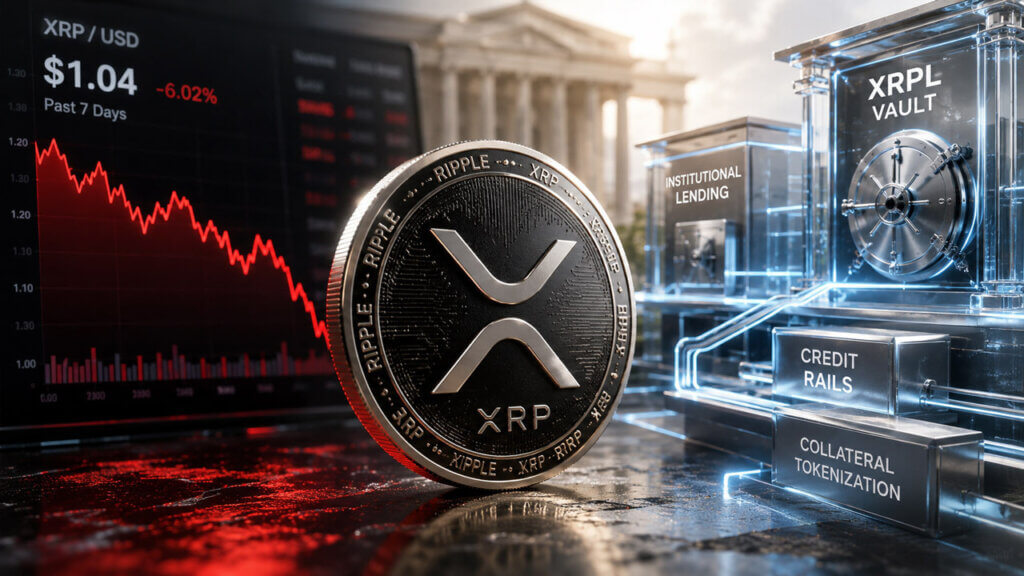
The August rebound now gives those efforts another test. Network participation has already recovered beyond the levels seen during XRP’s May rally, but sustaining that growth will require the activity to carry more persistent liquidity and capital as XRP trades back around $1.
Whale deposits collapse as leverage rebuilds near $1
Outside the ledger, XRP’s market structure is also shifting, with large holders sending far less XRP to Binance just as derivatives traders rebuild exposure around the token’s recent lows.
The three-month average of whale inflows to Binance has fallen to about $61 million, its lowest level since 2021, CryptoQuant contributor Darkfost said. The measure stood near $456 million in January 2025 and $355 million in October 2025.
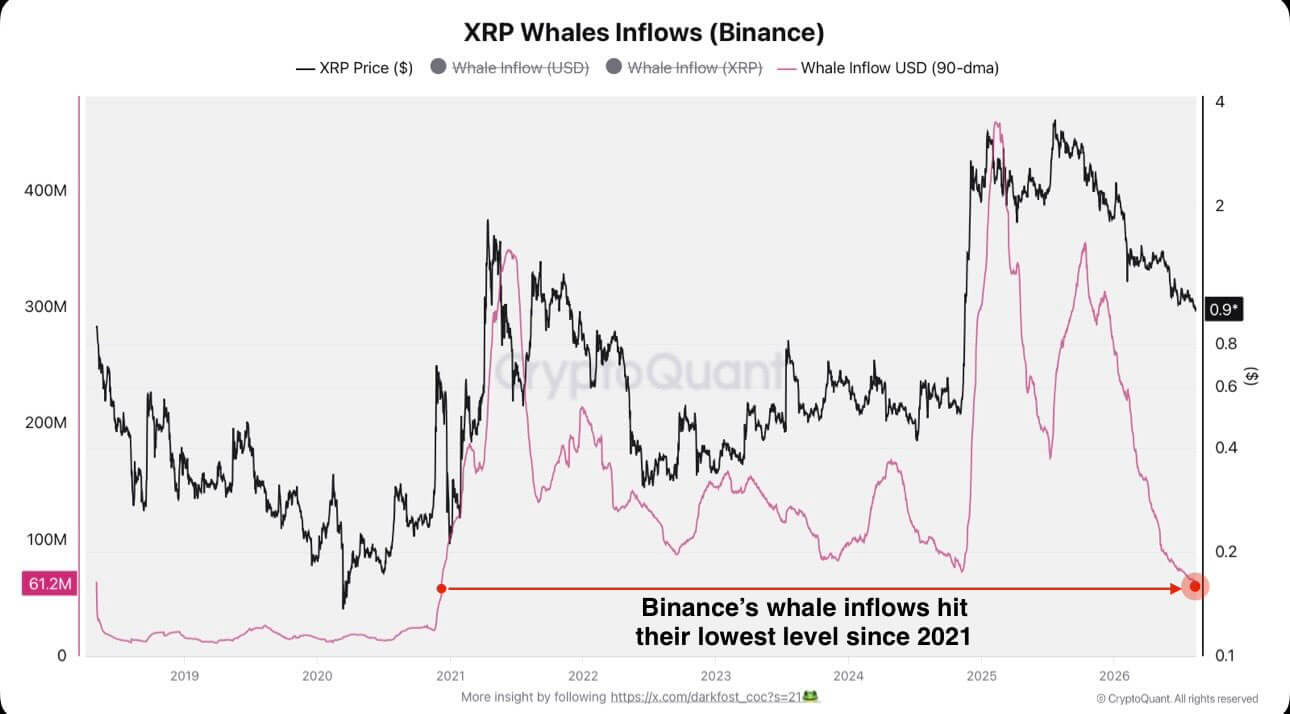
Current whale inflows are therefore six to eight times below those earlier levels, sharply reducing the amount of XRP that large holders are moving within reach of Binance’s spot market.
Still, net flows remain positive at about $18.8 million, meaning whale inflows continue to exceed outflows. The broader reduction in deposits has nevertheless removed a substantial source of potential exchange-side supply while XRP trades around $1.
Meanwhile, derivatives positioning in XRP has moved higher during the same period.
Bybit’s 30-day change in XRP open interest reached 54 million XRP on Aug. 12, almost matching the 54.5 million increase recorded on May 21. Binance added another 29.5 million XRP over the latest 30-day period, taking the combined increase across the two exchanges to about 83.5 million XRP.
The distribution has shifted since earlier in the summer. Binance recorded a 70.4 million XRP increase on June 6, while Bybit now accounts for the larger share of the latest build-up.
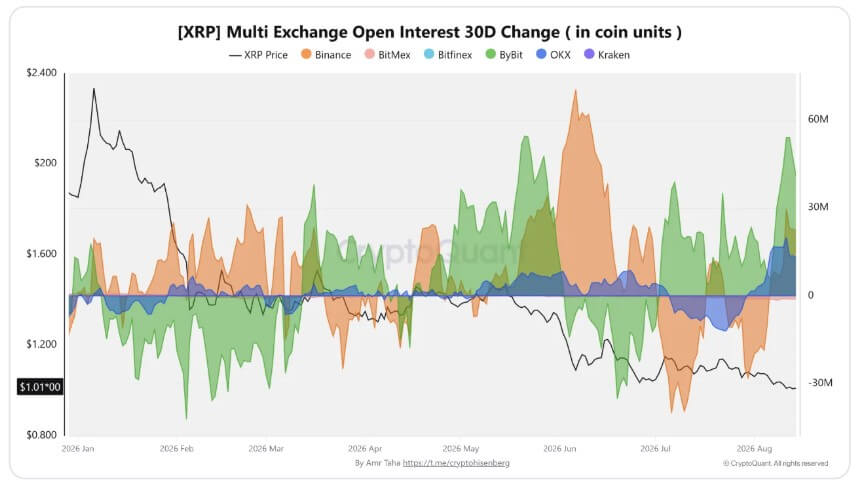
Because the measure is denominated in XRP, the increase reflects growth in coin-denominated open interest rather than an expansion created by a higher dollar price. The positions include both longs and shorts, leaving the direction of the new exposure unresolved.
XRP is therefore carrying more leverage even as substantially less whale supply reaches Binance. Neither shift has yet pulled the token materially away from $1.
Spot buyers remain the missing piece
The clearest weakness in XRP’s setup remains fresh spot demand, with US-listed ETFs drawing only modest new money as the token struggles around $1.
XRP ETFs attracted $131.94 million in May, when the token traded above $1.54, and XRPL activity reached its previous peak. Monthly inflows then fell to about $59.46 million in June and $27.29 million in July.
August has slowed further. Data from SoSoValue shows that the products have drawn only about $3.27 million through the first half of the month. Notably, most of these flows came on Aug. 13, when the funds drew $2.25 million in fresh capital.

This shows that the pace of new institutional capital entering the market has declined significantly for three consecutive months, alongside XRP’s price retreat.
For context, June inflows were roughly 55% below May’s total, while July fell another 54%. August’s $3.27 million intake is already about 88% below July’s full-month figure, though half of the month remains.
Nevertheless, cumulative ETF demand remains strong, with the products attracting roughly $1.51 billion since launch and holding about $942 million in net assets as of Aug. 13.
Essentially, the slowdown is occurring at the margin, where the amount of fresh capital arriving each month has fallen sharply.
That weakening flow provides the missing link between XRP’s underlying indicators and its price.
So, a stronger return of spot capital would meet a market with stronger network participation and lighter exchange-side pressure, which could generate the demand needed to sustain a recovery.


