

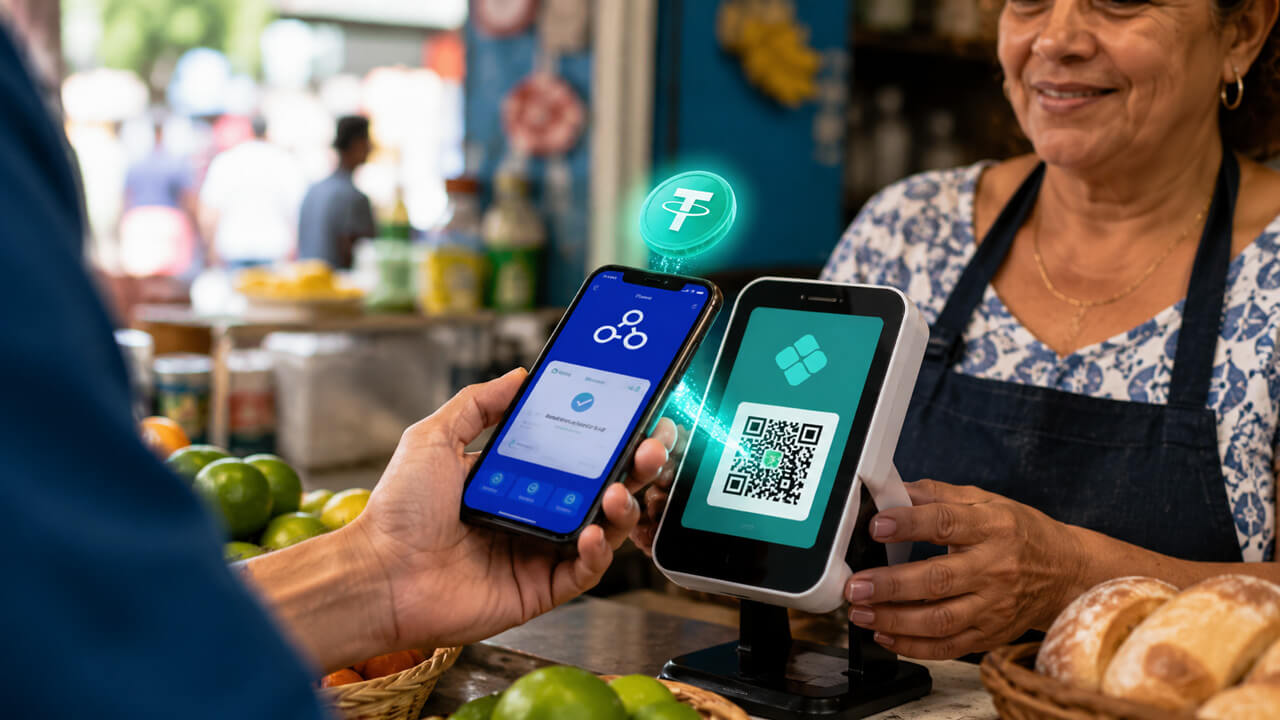
Oobit’s Pix launch in Brazil turns a stablecoin narrative into a payment-habit test.
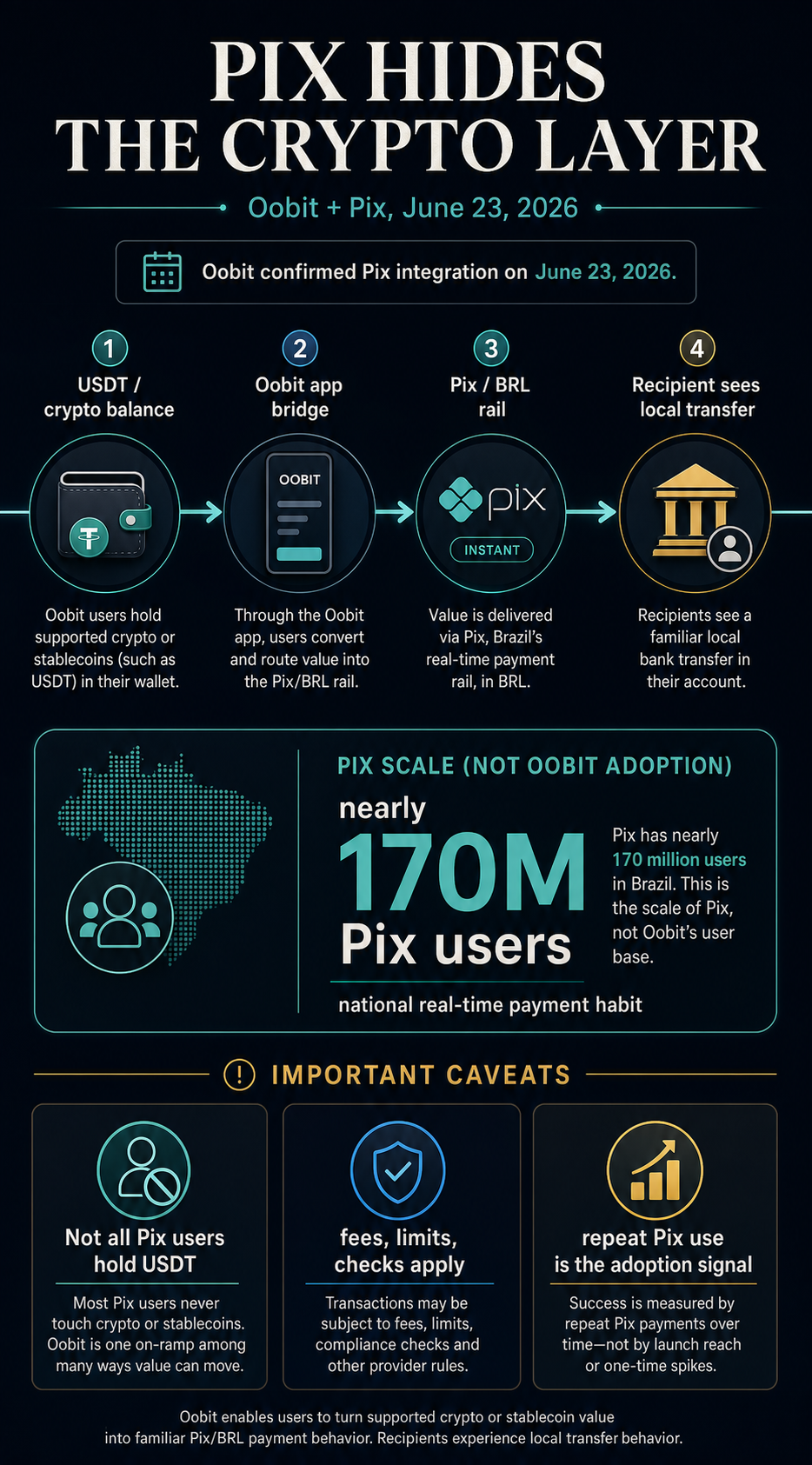
The company connected its app to Pix on June 23, placing supported crypto and stablecoin balances inside the transfer rail Brazilians already use to move money, pay merchants, split bills, and receive transfers.
The practical lesson is simple: stablecoins have a better shot at daily payments when the user spends via a familiar domestic rail, while the recipient sees a local transfer rather than a crypto handoff.
The company describes the launch as bringing crypto to Pix through native Pix payments in Brazil, allowing users to send crypto to a Pix key or deposit via Pix. Its official X account also confirmed the Brazil/Pix rollout on June 23.
The experience points from a crypto balance toward a familiar local transfer. A user may hold or authorize crypto value through Oobit, but the recipient-side behavior is designed around Pix and Brazilian reais, without asking every counterparty to hold USDT.
The crypto layer becomes most useful when it fades from the recipient’s experience.
How The Pix Bridge Works
Oobit’s broader product pages describe a flow in which users send crypto and recipients receive local currency directly into bank accounts or supported wallets. Its Send Crypto page lists Pix as available in Brazil, supports BRL, and says transfers usually arrive in seconds.
The company’s FAQ adds some caveats: verification is required, fees and limits can apply, and availability depends on location and supported products.
Oobit is positioning USDT and other supported crypto balances as a behind-the-scenes value source for a payment action Brazilians already recognize. Pix remains Brazil’s domestic payment system, while Oobit handles the bridge into a Pix-linked experience.
The user, bank-account, and settlement layers should be kept separate:
| Layer | What the user sees | What to keep separate |
|---|---|---|
| Oobit app | A crypto or stablecoin balance can be used for a Pix-linked action, subject to product availability and checks. | Pix scale is separate from Oobit user adoption. |
| Pix and BRL rails | The recipient-side experience can look like a local-money transfer into Brazil’s domestic payment system. | Pix remains a domestic payment rail rather than a blockchain network. |
| Settlement layer | Oobit handles the bridge between crypto value and local payment behavior. | The company has not disclosed every launch-specific conversion, partner, fee, or settlement detail. |
Oobit has been building toward this model for months. In February, the company announced wallet-to-bank transfers that allow stablecoins held in self-custody wallets to settle into bank accounts via local rails, including Pix.
That product framing shows the company is selling the bridge between a crypto balance and a domestic payment system, not only crypto as a checkout asset.
The distinction changes the USDT framing. Stablecoins often solve a balance problem before they solve a payment problem.
Users may want dollar exposure, faster transfer value, or an alternative to local volatility, but that does not automatically make stablecoins convenient for everyday payments. The payment problem is behavioral: people pay with whatever fits the rails, merchants, and recipients they already use.
Why Pix Changes The Payment Test
Banco Central do Brasil’s own Pix materials put that habit in national terms, noting that Pix has reached nearly 170 million users. Its official statistics page also tracks Pix and SPI transaction data, underscoring that the system is core infrastructure for Brazilian transfers.

The launch creates a useful test of whether stablecoin value can enter the actions users already take when they pay or receive money. It gives Oobit access to a rail with national reach, but it does not demonstrate widespread use of stablecoins on its own.
CryptoSlate has already covered a similar pattern in card payments. Stablecoins were built in part to bypass legacy card rails, yet recent payment-card adoption has shown that crypto balances often travel farther when wrapped within familiar Visa-style checkout behavior.
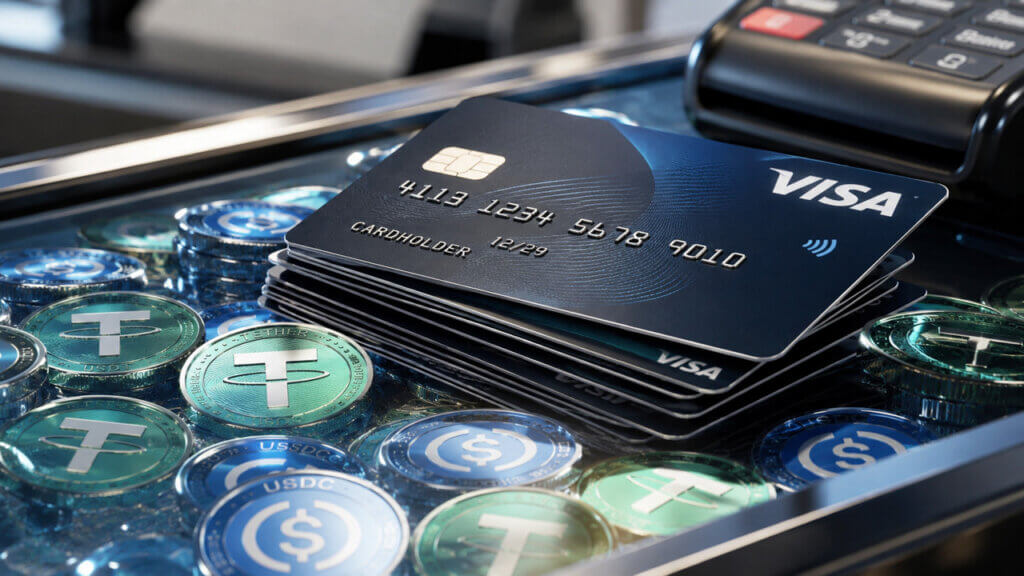
Another CryptoSlate analysis described how stablecoins are being built into payment plumbing before most users even see the crypto layer.
Pix has a different role in that comparison: it is Brazil’s domestic real-time rail, embedded in local transfer behavior rather than a global card network. The adoption lesson is still related.
Stablecoins become more practical when they move into the background of a payment behavior that users already trust.
That makes the Brazil case useful. Previous CryptoSlate coverage has described how stablecoins, especially USDT, have become a larger part of Brazil’s crypto economy.
Oobit’s own Brazil-focused stablecoin materials also argue that holding stablecoins and spending them are different behaviors. The Pix integration addresses the second problem: how to turn a stablecoin balance into something that can move through a local payment habit.
The Signal To Watch
The next signal is repeat use, not launch reach. Oobit’s launch does not mean nearly 170 million people are now using USDT. It means Oobit can present its product against a rail with that scale, and users who choose Oobit can route supported crypto value into Pix-linked actions.
The strongest signal would be repeated Pix-key payments, Pix deposits, BRL payouts, active Brazilian users, and evidence that users treat stablecoins as a balance they can spend without changing their existing payment habits.
The limiting case is also clear. If fees, limits, verification steps, asset support, availability, or unclear settlement costs make the flow feel like a workaround, the Pix connection may become more of a crypto feature than a mainstream payment habit.
Oobit’s FAQ already makes clear that these product constraints exist, even if the company frames the end experience as simple.
Notably, CryptoSlate previously reported that Oobit raised a $25 million Series A led by Tether.

The current test is whether a dollar stablecoin becomes more useful when the user does not have to persuade the recipient to care about the stablecoin.
For stablecoin payments, that may be the larger point. Adoption does not always arrive as a new payment ritual. Sometimes it arrives when the balance changes, while the habit stays the same.
Pix gives Oobit a large, familiar rail to test that idea. The next result will depend on whether users treat USDT as a spendable balance inside Pix behavior, or whether the gap between crypto value and everyday payments remains visible enough to keep stablecoins in the wallet rather than in the checkout flow.


