

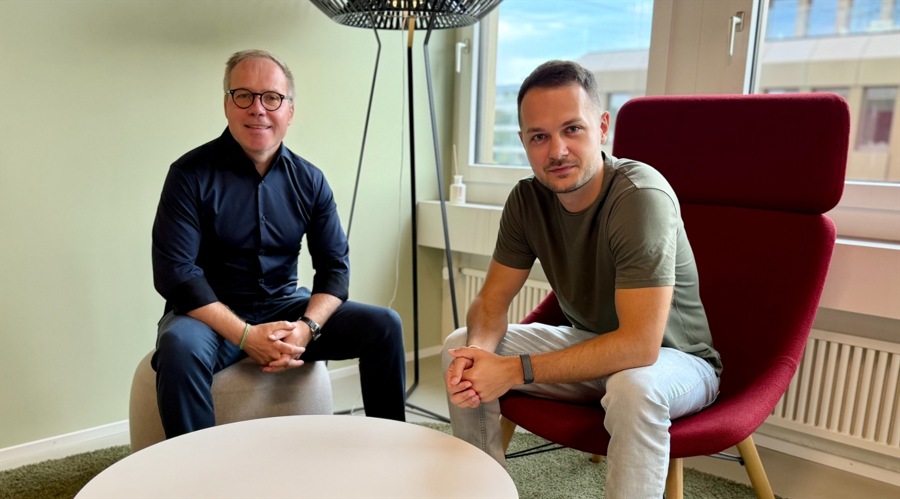
“You could almost argue that risk is my middle name.” Ingmar Mattus, who co-founded Tickmill in 2014 and has spent close to two decades making risk management decisions inside brokerage firms, was explaining what drew him to TradersYard, the Vienna-based proprietary trading firm he has backed since 2023 through his Swiss private equity vehicle, Andromeda Capital Partners. It was precisely that expertise TradersYard co-founder Manuel Sonnleithner said his own team was missing going into the deal. “We were not risk managers, we were tech people with a lot of experience in trading technology, but not on how the risk management works behind it,”
Mattus’s line could just as easily stand in for his broader assessment of retail trading in 2026: an industry he believes has become considerably harder to build in, and considerably less forgiving of firms that get it wrong.
Speaking with Finance Magnates, Mattus was joined by Sonnleithner, whose read of the current climate was, if anything, blunter. “Many firms will die over the next one, two years, as it’s happening,” Sonnleithner said of the wider prop trading and broker landscape. Together, the two laid out why launching and scaling a brokerage today bears little resemblance to what it took when Mattus started Tickmill twelve years ago, why a string of well-known industry names have recently sold up or closed entirely, and where Andromeda’s growing cluster of financial services firms is headed next.
Tickmill Had “a Little Bit of Luck”
Back in 2014, Mattus said, competition was thinner and regulation looser, and Tickmill had “a little bit of luck” on its side too. What has changed since, in his view, is that a CFD broker launched today is no longer competing only with other CFD brokers. It is competing with futures brokers, with prediction-market platforms such as Kalshi and Polymarket, and with standard equity brokers offering leveraged options, all chasing the same client.
JUST IN: @Kalshi has already surpassed $7B in Monthly Crypto Volume this month pic.twitter.com/o7glnKj4Ix
— KalshiData (@kalshidata) August 30, 2026
He drew a parallel to the binary options era roughly six or seven years ago, when the more gamified product pulled flow away from CFD firms because it was simply easier to sell.
That pressure, Mattus argued, is not confined to Europe, where binary options remain banned, and event contracts occupy similar territory. Outside the region, US-based prediction-market operators are competing with CFD and futures brokers alike for the same retail traders.
Regulation has tightened alongside the competition, and not only the rules written by governments. “By regulations, I don’t only mean the regulations coming from governments,” Mattus said. “I also mean various policies that financial institutions have in place. Back in the days, it was much easier to open bank accounts for brokerage firms.
But today, even when you talk about banks, it’s much more difficult to even get a bank account open for a newly established brokerage firm.”
Asked why so many established brokerage names have recently exited the business, sold up, or closed down entirely, Mattus offered four explanations.
Read more: AETOS Owners Completely Exit CFD Business by Selling Aussie Unit
The first is risk management: client flow, he said, has become harder to hedge as retail traders increasingly act in coordinated groups, sometimes thousands strong, placing identical trades that are too large to offset externally. The second is regulation, and he cited ESMA’s 2018 CFD leverage restrictions as the clearest example, a rule change that pushed profitability down across Europe and drove several larger firms to scale back or leave the region entirely.
“When we were looking at some of the bigger firms exiting Europe back in the day, we were almost laughing in the sense that it just felt completely irrational to leave Europe,” Mattus said. “But over time, of course, you come to realise that possibly it’s much more beneficial for business if you’re focusing on regions that have more friendly regulations.” The third is competition from adjacent products, and the fourth, he said, is a mindset problem.
Dear BitMEX Users,
Today, we share with a very heavy heart that BitMEX exchange will shut down its operations, effective 23 September 2026 at 04:00:00 UTC.
The owner and operator of BitMEX, HDR Global Trading Limited, has made the difficult decision to close operations… pic.twitter.com/oWuqlh547f
— BitMEX (@BitMEX) July 23, 2026
“The Mindset Needs to Be Different”
CFD products generate more revenue per client than exchange-traded alternatives such as equities or futures, and that gap, according to Mattus, has made it extremely difficult for CFD firm owners to embrace lower-margin products even when client demand has clearly moved that way. “Steve Jobs (who reiterated Henry Ford) used to say that clients don’t know what they want, we need to tell them what they want, which is maybe the mindset of a typical CFD broker,” Mattus said. “But I think the mindset needs to be different, that you need to constantly be on top of things as to what products are attractive to the audiences out there.”
If traders want ETFs, cash equities, or perpetual futures, he said, brokers should launch them regardless of the thinner margins, because “it’s irrelevant what you think you should do. It’s relevant what the market wants you to do.”
He pointed to the speed gap between legacy brokers and newer platforms as evidence of the same problem.
Kalshi, the US prediction-market operator, can launch a new product on its platform in around minutes, Mattus said, while a typical CFD or equities broker can take months to add a new asset class. “In 2026, with AI, with all this competition, whether in the prop industry or any other industry, the speed of delivering stuff is of utmost importance,” he said. “You just can’t sit on things, develop, and analyse. You have to deliver things.”
CFD brokers pushing into US futures and options, following IG and Plus500 into the market, is the clearest sign of firms trying to adapt, in Mattus’s telling, and a fairly obvious move given how closely CFDs and futures resemble each other from a client’s perspective.
Mattus made a similar bet with MetroTrade, a Chicago-based futures and options introducing broker registered with the US Commodity Futures Trading Commission that he launched through Andromeda in 2024.
“We Will Build Everything In-House”
TradersYard’s own path illustrates the diversification problem from the other side of the table. The company began in 2013 as a professional trading platform sold into German-speaking markets under a different brand, before Sonnleithner and his team built TradersYard itself in 2020 as a social network for traders, filling a gap that Discord had not yet occupied.
There was no plan to move into prop trading when the first conversations with Mattus began in autumn 2022, following a meeting at a World of Trading conference in Frankfurt. Andromeda’s investment, agreed in 2023, came with a condition attached. “The deal was that we would not use any third party. We will build everything in-house,” Sonnleithner said. “No dependencies on anybody, just the talented team we had built there.”
Read more: TradersYard Raises Undisclosed Sum From Ingmar Mattus’ Andromeda to Fund Global Expansion
The deal, Sonnleithner confirmed, was structured in two tranches: an initial €3.5 million, followed by a milestone-based €1.5 million once TradersYard proved it could deliver on a tight technical timeline, for a total of €5 million. “It was not an easy time to raise money at all,” he said of the 2022 to 2023 fintech funding environment, when high interest rates had cooled investor appetite and valuations across the sector had dropped.
“We saw the vision with Ingmar as a strategic backing in that sense, because Ingmar could not only bring in money but also strategy. This is where it definitely made a lot of sense for us to give a significant portion of the company for this significant investment.”
Building the platform, Sonnleithner said, was harder than expected in ways that had little to do with the interface traders actually see. “The dashboard is the easy part,” he said. The difficult part was constructing the execution mechanisms behind it, effectively a brokerage back end running on a demo environment, along with learning risk management from scratch, an area where his largely tech-focused founding team leaned heavily on Mattus’s two decades of brokerage experience.
Separately, TradersYard secured a CME data distribution licence, a licence that CME had stopped granting to pure prop trading providers by the time TradersYard applied. The firm qualified because the wider Andromeda group includes regulated brokers to which TradersYard can legally refer clients who want to trade real futures. “We were one of the first from the CME to get this licence, and we were together with the CME for many months, talking and working out how this licence should even work,” Sonnleithner said. “We were really on the forefront, even of the legal side of things.”
From the initial 2023 investment, it took roughly a year and a half to reach public beta testing in early 2025, drawing on a base of 20,000 traders already active on the TradersYard social network for early feedback. A second capital injection, the milestone-based €1.5 million, arrived in the summer of 2025 to fund marketing rather than further engineering, by which point the core technology was largely built. The team behind it has stayed lean, at around 15 people.
Can We Have MT5?
The rationale for avoiding third-party platforms became more pointed when Sonnleithner brought up MetaQuotes’ crackdown on prop firms using grey-labelled MetaTrader licences, which began cutting firms off in early 2024 over their handling of US clients and reshaped the competitive landscape for platform providers almost overnight.
Read more: Prop Trading and MetaQuotes: Funding Pips Case May Mark the End of MT Access to US Clients
Sonnleithner said the firm’s Discord community is regularly asked why it will not simply offer MetaTrader 5. “One of the biggest requests we get in our Discord is, ‘Can we have MT5?’ MT5 has such a big market power; you cannot deny that people are just used to it,” he said.
Relying on a third-party platform lets a prop firm launch fast and cheaply, he acknowledged: “You can start a prop in a week, maybe even less by now, and a few thousand euros if you want to. You will maybe make some money in the short-term, but you will die eventually.” Firms that rely on revenue-sharing deals with platform providers are left with little margin to run on, he added.
“Imagine you’re fighting to get your revenue-to-payout ratio somewhere around maybe 50 per cent, which is already good in the industry, and then you have to pay 25 per cent to affiliates and 10 to 15 per cent to a platform provider. There’s not a lot of revenue left to pay for your operations.”
Mattus made the same point from the investor’s side: if the goal is a future acquisition, a firm’s only realistic option is to own its technology outright. “If there is a successful prop firm out there who’s operating almost entirely on MT5, then there is literally no value there, because these clients can switch the next day to another prop firm,” he said.
The Goal Is to Have Influence with Investment
TradersYard now sits inside a wider Andromeda portfolio that Mattus has assembled with the explicit aim of building an interconnected ecosystem rather than a scattered set of bets. Alongside Tickmill, the group includes Change Securities, an Amsterdam-based firm holding both a MiCA crypto licence and a full MiFID investment firm licence from the Dutch regulator, a combination Mattus described as unusual and valuable given how few crypto firms in Europe hold both; MetroTrade, the US futures and options introducing broker; and Boltzmann Research, which provides quantitative and risk management services to other brokers and prop firms.
Andromeda typically takes an initial 5 to 10 per cent stake with an option to move to majority ownership, as it did with Change Securities, rather than spreading smaller stakes across many companies. “It could be less risky to make 50 smaller investments into different firms, but then you end up being one of the hundreds or thousands of shareholders, and you really don’t have any influence,” Mattus said. “You become a tiny shareholder in a group of shareholders.”
Holding control, he said, is what lets Andromeda’s companies lean on each other directly. “Whatever we want, we build it. We don’t have to ask anybody else. We are completely independent. We can do whatever we want with technology and products,” he said of MetroTrade and Change Securities in particular. “It’s kind of beautiful what we have built, and we’re only getting started.”
Looking ahead, Mattus said Andromeda is working on a business-to-business version of TradersYard’s technology, pitched primarily at brokerage firms rather than other prop trading operators, alongside further licence expansion for Change Securities.
Prop trading is going to be a lead generator
Asked where the prop trading industry is headed through the rest of the decade, Sonnleithner pointed to a set of pressures reshaping the sector in real time: Meta’s crackdown on prop firms’ advertising accounts, an ongoing race to the bottom on evaluation discounts that he said leaves little revenue for firms to operate on once affiliate and platform-provider cuts are factored in, and a shift in toxic trading flow from CFDs toward futures that is now causing some futures-focused firms similar trouble.
Surviving sharp moves in commodities such as silver, gold, and oil, he said, requires capital reserves that most of the smaller, discount-driven firms in the market simply do not have. “Maybe some influencers even started them,” he said. “They don’t know about risk management, and they will go under eventually. It’s just how it is.”
He expects further consolidation among weaker operators, alongside a slow shift in how traders choose a firm, from picking the cheapest discount to weighing risk management and payout reliability instead.
Mattus, who said he is a personal investor in Plus500, IG, and eToro alongside his Andromeda holdings, framed prop trading’s longer-term trajectory in similar terms but from the acquirer’s seat. “The way I see prop trading is that it’s going to be not just a separate, unique industry, but one link in the chain of operating a financial services business,” he said.
PLUS, IGG and CMCX shares in the last 5 years (Google Finance)
“If there are any acquisitions, I don’t think they would come from VC funds acquiring prop firms, but rather brokerage firms acquiring prop firms,” partly because CFD and futures advertising is far more restricted than marketing for prop trading challenges. He also described prop firms as a useful education layer for the wider industry, since their risk rules teach new traders discipline before they graduate to a live brokerage account:
“One might argue the rules are there to discriminate against traders, but if you look at the rules, really, these are good rules for any trader out there,” Mattus added. “Regulation of the sector as a whole, he said, is ‘highly likely’ within the next two to three years, a shift he expects will formalise a trend already underway.
Asked whether he had anything to announce about Andromeda’s next investment, Mattus pointed to TradersYard’s own roadmap rather than a fresh acquisition. “We are definitely going into the B2B space,” he said. “TradersYard today is a B2C operation, but with the integrations TradersYard already has, and will have in twelve months from now, it will become a very attractive solution for even brokerage firms.” Pressed on whether that meant selling TradersYard’s platform to brokers looking to expand into prop trading, Mattus said the target sits on the other side of the industry instead: “More so, actually, on the brokerage side, not on the prop side.” Alongside the B2B push, he said Andromeda plans further licence expansion for Change Securities.
“You could almost argue that risk is my middle name.” Ingmar Mattus, who co-founded Tickmill in 2014 and has spent close to two decades making risk management decisions inside brokerage firms, was explaining what drew him to TradersYard, the Vienna-based proprietary trading firm he has backed since 2023 through his Swiss private equity vehicle, Andromeda Capital Partners. It was precisely that expertise TradersYard co-founder Manuel Sonnleithner said his own team was missing going into the deal. “We were not risk managers, we were tech people with a lot of experience in trading technology, but not on how the risk management works behind it,”
Mattus’s line could just as easily stand in for his broader assessment of retail trading in 2026: an industry he believes has become considerably harder to build in, and considerably less forgiving of firms that get it wrong.
Speaking with Finance Magnates, Mattus was joined by Sonnleithner, whose read of the current climate was, if anything, blunter. “Many firms will die over the next one, two years, as it’s happening,” Sonnleithner said of the wider prop trading and broker landscape. Together, the two laid out why launching and scaling a brokerage today bears little resemblance to what it took when Mattus started Tickmill twelve years ago, why a string of well-known industry names have recently sold up or closed entirely, and where Andromeda’s growing cluster of financial services firms is headed next.
Tickmill Had “a Little Bit of Luck”
Back in 2014, Mattus said, competition was thinner and regulation looser, and Tickmill had “a little bit of luck” on its side too. What has changed since, in his view, is that a CFD broker launched today is no longer competing only with other CFD brokers. It is competing with futures brokers, with prediction-market platforms such as Kalshi and Polymarket, and with standard equity brokers offering leveraged options, all chasing the same client.
JUST IN: @Kalshi has already surpassed $7B in Monthly Crypto Volume this month pic.twitter.com/o7glnKj4Ix
— KalshiData (@kalshidata) August 30, 2026
He drew a parallel to the binary options era roughly six or seven years ago, when the more gamified product pulled flow away from CFD firms because it was simply easier to sell.
That pressure, Mattus argued, is not confined to Europe, where binary options remain banned, and event contracts occupy similar territory. Outside the region, US-based prediction-market operators are competing with CFD and futures brokers alike for the same retail traders.
Regulation has tightened alongside the competition, and not only the rules written by governments. “By regulations, I don’t only mean the regulations coming from governments,” Mattus said. “I also mean various policies that financial institutions have in place. Back in the days, it was much easier to open bank accounts for brokerage firms.
But today, even when you talk about banks, it’s much more difficult to even get a bank account open for a newly established brokerage firm.”
Asked why so many established brokerage names have recently exited the business, sold up, or closed down entirely, Mattus offered four explanations.
Read more: AETOS Owners Completely Exit CFD Business by Selling Aussie Unit
The first is risk management: client flow, he said, has become harder to hedge as retail traders increasingly act in coordinated groups, sometimes thousands strong, placing identical trades that are too large to offset externally. The second is regulation, and he cited ESMA’s 2018 CFD leverage restrictions as the clearest example, a rule change that pushed profitability down across Europe and drove several larger firms to scale back or leave the region entirely.
“When we were looking at some of the bigger firms exiting Europe back in the day, we were almost laughing in the sense that it just felt completely irrational to leave Europe,” Mattus said. “But over time, of course, you come to realise that possibly it’s much more beneficial for business if you’re focusing on regions that have more friendly regulations.” The third is competition from adjacent products, and the fourth, he said, is a mindset problem.
Dear BitMEX Users,
Today, we share with a very heavy heart that BitMEX exchange will shut down its operations, effective 23 September 2026 at 04:00:00 UTC.
The owner and operator of BitMEX, HDR Global Trading Limited, has made the difficult decision to close operations… pic.twitter.com/oWuqlh547f
— BitMEX (@BitMEX) July 23, 2026
“The Mindset Needs to Be Different”
CFD products generate more revenue per client than exchange-traded alternatives such as equities or futures, and that gap, according to Mattus, has made it extremely difficult for CFD firm owners to embrace lower-margin products even when client demand has clearly moved that way. “Steve Jobs (who reiterated Henry Ford) used to say that clients don’t know what they want, we need to tell them what they want, which is maybe the mindset of a typical CFD broker,” Mattus said. “But I think the mindset needs to be different, that you need to constantly be on top of things as to what products are attractive to the audiences out there.”
If traders want ETFs, cash equities, or perpetual futures, he said, brokers should launch them regardless of the thinner margins, because “it’s irrelevant what you think you should do. It’s relevant what the market wants you to do.”
He pointed to the speed gap between legacy brokers and newer platforms as evidence of the same problem.
Kalshi, the US prediction-market operator, can launch a new product on its platform in around minutes, Mattus said, while a typical CFD or equities broker can take months to add a new asset class. “In 2026, with AI, with all this competition, whether in the prop industry or any other industry, the speed of delivering stuff is of utmost importance,” he said. “You just can’t sit on things, develop, and analyse. You have to deliver things.”
CFD brokers pushing into US futures and options, following IG and Plus500 into the market, is the clearest sign of firms trying to adapt, in Mattus’s telling, and a fairly obvious move given how closely CFDs and futures resemble each other from a client’s perspective.
Mattus made a similar bet with MetroTrade, a Chicago-based futures and options introducing broker registered with the US Commodity Futures Trading Commission that he launched through Andromeda in 2024.
“We Will Build Everything In-House”
TradersYard’s own path illustrates the diversification problem from the other side of the table. The company began in 2013 as a professional trading platform sold into German-speaking markets under a different brand, before Sonnleithner and his team built TradersYard itself in 2020 as a social network for traders, filling a gap that Discord had not yet occupied.
There was no plan to move into prop trading when the first conversations with Mattus began in autumn 2022, following a meeting at a World of Trading conference in Frankfurt. Andromeda’s investment, agreed in 2023, came with a condition attached. “The deal was that we would not use any third party. We will build everything in-house,” Sonnleithner said. “No dependencies on anybody, just the talented team we had built there.”
Read more: TradersYard Raises Undisclosed Sum From Ingmar Mattus’ Andromeda to Fund Global Expansion
The deal, Sonnleithner confirmed, was structured in two tranches: an initial €3.5 million, followed by a milestone-based €1.5 million once TradersYard proved it could deliver on a tight technical timeline, for a total of €5 million. “It was not an easy time to raise money at all,” he said of the 2022 to 2023 fintech funding environment, when high interest rates had cooled investor appetite and valuations across the sector had dropped.
“We saw the vision with Ingmar as a strategic backing in that sense, because Ingmar could not only bring in money but also strategy. This is where it definitely made a lot of sense for us to give a significant portion of the company for this significant investment.”
Building the platform, Sonnleithner said, was harder than expected in ways that had little to do with the interface traders actually see. “The dashboard is the easy part,” he said. The difficult part was constructing the execution mechanisms behind it, effectively a brokerage back end running on a demo environment, along with learning risk management from scratch, an area where his largely tech-focused founding team leaned heavily on Mattus’s two decades of brokerage experience.
Separately, TradersYard secured a CME data distribution licence, a licence that CME had stopped granting to pure prop trading providers by the time TradersYard applied. The firm qualified because the wider Andromeda group includes regulated brokers to which TradersYard can legally refer clients who want to trade real futures. “We were one of the first from the CME to get this licence, and we were together with the CME for many months, talking and working out how this licence should even work,” Sonnleithner said. “We were really on the forefront, even of the legal side of things.”
From the initial 2023 investment, it took roughly a year and a half to reach public beta testing in early 2025, drawing on a base of 20,000 traders already active on the TradersYard social network for early feedback. A second capital injection, the milestone-based €1.5 million, arrived in the summer of 2025 to fund marketing rather than further engineering, by which point the core technology was largely built. The team behind it has stayed lean, at around 15 people.
Can We Have MT5?
The rationale for avoiding third-party platforms became more pointed when Sonnleithner brought up MetaQuotes’ crackdown on prop firms using grey-labelled MetaTrader licences, which began cutting firms off in early 2024 over their handling of US clients and reshaped the competitive landscape for platform providers almost overnight.
Read more: Prop Trading and MetaQuotes: Funding Pips Case May Mark the End of MT Access to US Clients
Sonnleithner said the firm’s Discord community is regularly asked why it will not simply offer MetaTrader 5. “One of the biggest requests we get in our Discord is, ‘Can we have MT5?’ MT5 has such a big market power; you cannot deny that people are just used to it,” he said.
Relying on a third-party platform lets a prop firm launch fast and cheaply, he acknowledged: “You can start a prop in a week, maybe even less by now, and a few thousand euros if you want to. You will maybe make some money in the short-term, but you will die eventually.” Firms that rely on revenue-sharing deals with platform providers are left with little margin to run on, he added.
“Imagine you’re fighting to get your revenue-to-payout ratio somewhere around maybe 50 per cent, which is already good in the industry, and then you have to pay 25 per cent to affiliates and 10 to 15 per cent to a platform provider. There’s not a lot of revenue left to pay for your operations.”
Mattus made the same point from the investor’s side: if the goal is a future acquisition, a firm’s only realistic option is to own its technology outright. “If there is a successful prop firm out there who’s operating almost entirely on MT5, then there is literally no value there, because these clients can switch the next day to another prop firm,” he said.
The Goal Is to Have Influence with Investment
TradersYard now sits inside a wider Andromeda portfolio that Mattus has assembled with the explicit aim of building an interconnected ecosystem rather than a scattered set of bets. Alongside Tickmill, the group includes Change Securities, an Amsterdam-based firm holding both a MiCA crypto licence and a full MiFID investment firm licence from the Dutch regulator, a combination Mattus described as unusual and valuable given how few crypto firms in Europe hold both; MetroTrade, the US futures and options introducing broker; and Boltzmann Research, which provides quantitative and risk management services to other brokers and prop firms.
Andromeda typically takes an initial 5 to 10 per cent stake with an option to move to majority ownership, as it did with Change Securities, rather than spreading smaller stakes across many companies. “It could be less risky to make 50 smaller investments into different firms, but then you end up being one of the hundreds or thousands of shareholders, and you really don’t have any influence,” Mattus said. “You become a tiny shareholder in a group of shareholders.”
Holding control, he said, is what lets Andromeda’s companies lean on each other directly. “Whatever we want, we build it. We don’t have to ask anybody else. We are completely independent. We can do whatever we want with technology and products,” he said of MetroTrade and Change Securities in particular. “It’s kind of beautiful what we have built, and we’re only getting started.”
Looking ahead, Mattus said Andromeda is working on a business-to-business version of TradersYard’s technology, pitched primarily at brokerage firms rather than other prop trading operators, alongside further licence expansion for Change Securities.
Prop trading is going to be a lead generator
Asked where the prop trading industry is headed through the rest of the decade, Sonnleithner pointed to a set of pressures reshaping the sector in real time: Meta’s crackdown on prop firms’ advertising accounts, an ongoing race to the bottom on evaluation discounts that he said leaves little revenue for firms to operate on once affiliate and platform-provider cuts are factored in, and a shift in toxic trading flow from CFDs toward futures that is now causing some futures-focused firms similar trouble.
Surviving sharp moves in commodities such as silver, gold, and oil, he said, requires capital reserves that most of the smaller, discount-driven firms in the market simply do not have. “Maybe some influencers even started them,” he said. “They don’t know about risk management, and they will go under eventually. It’s just how it is.”
He expects further consolidation among weaker operators, alongside a slow shift in how traders choose a firm, from picking the cheapest discount to weighing risk management and payout reliability instead.
Mattus, who said he is a personal investor in Plus500, IG, and eToro alongside his Andromeda holdings, framed prop trading’s longer-term trajectory in similar terms but from the acquirer’s seat. “The way I see prop trading is that it’s going to be not just a separate, unique industry, but one link in the chain of operating a financial services business,” he said.
PLUS, IGG and CMCX shares in the last 5 years (Google Finance)
“If there are any acquisitions, I don’t think they would come from VC funds acquiring prop firms, but rather brokerage firms acquiring prop firms,” partly because CFD and futures advertising is far more restricted than marketing for prop trading challenges. He also described prop firms as a useful education layer for the wider industry, since their risk rules teach new traders discipline before they graduate to a live brokerage account:
“One might argue the rules are there to discriminate against traders, but if you look at the rules, really, these are good rules for any trader out there,” Mattus added. “Regulation of the sector as a whole, he said, is ‘highly likely’ within the next two to three years, a shift he expects will formalise a trend already underway.
Asked whether he had anything to announce about Andromeda’s next investment, Mattus pointed to TradersYard’s own roadmap rather than a fresh acquisition. “We are definitely going into the B2B space,” he said. “TradersYard today is a B2C operation, but with the integrations TradersYard already has, and will have in twelve months from now, it will become a very attractive solution for even brokerage firms.” Pressed on whether that meant selling TradersYard’s platform to brokers looking to expand into prop trading, Mattus said the target sits on the other side of the industry instead: “More so, actually, on the brokerage side, not on the prop side.” Alongside the B2B push, he said Andromeda plans further licence expansion for Change Securities.


