

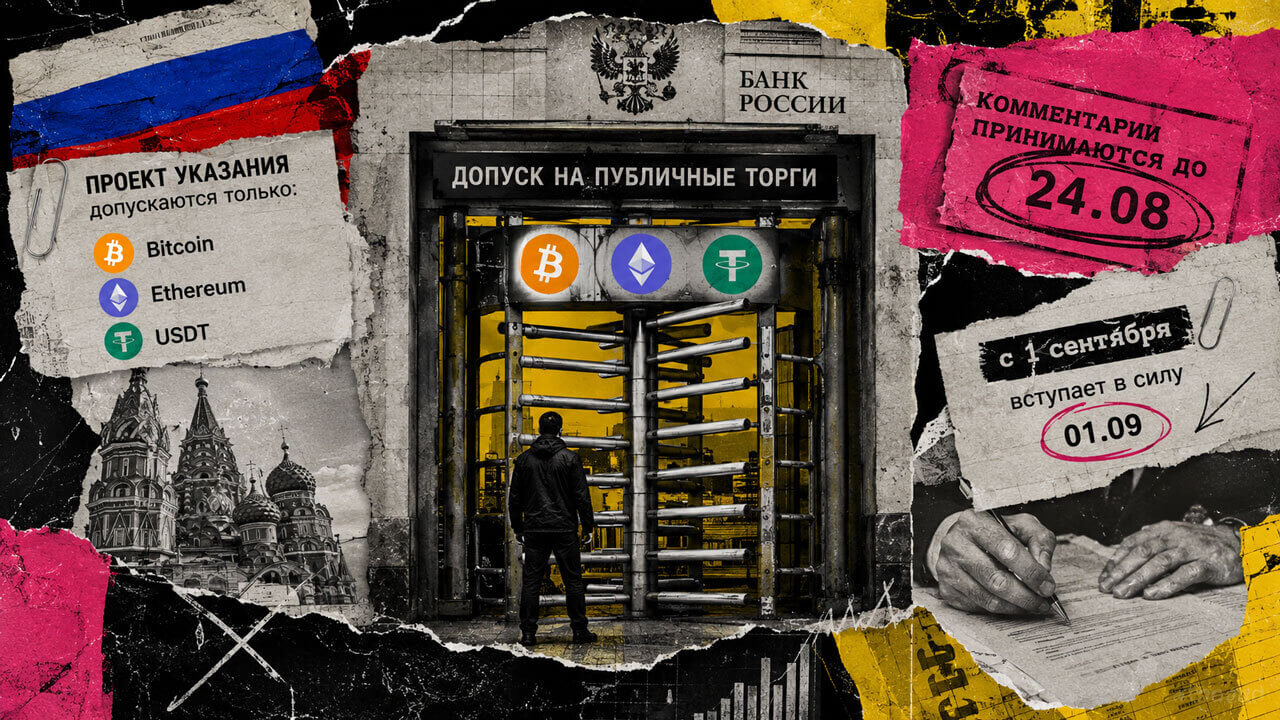
The Bank of Russia has proposed opening public organized crypto trading with only Bitcoin, Ethereum, and Tether’s USDT eligible for admission.
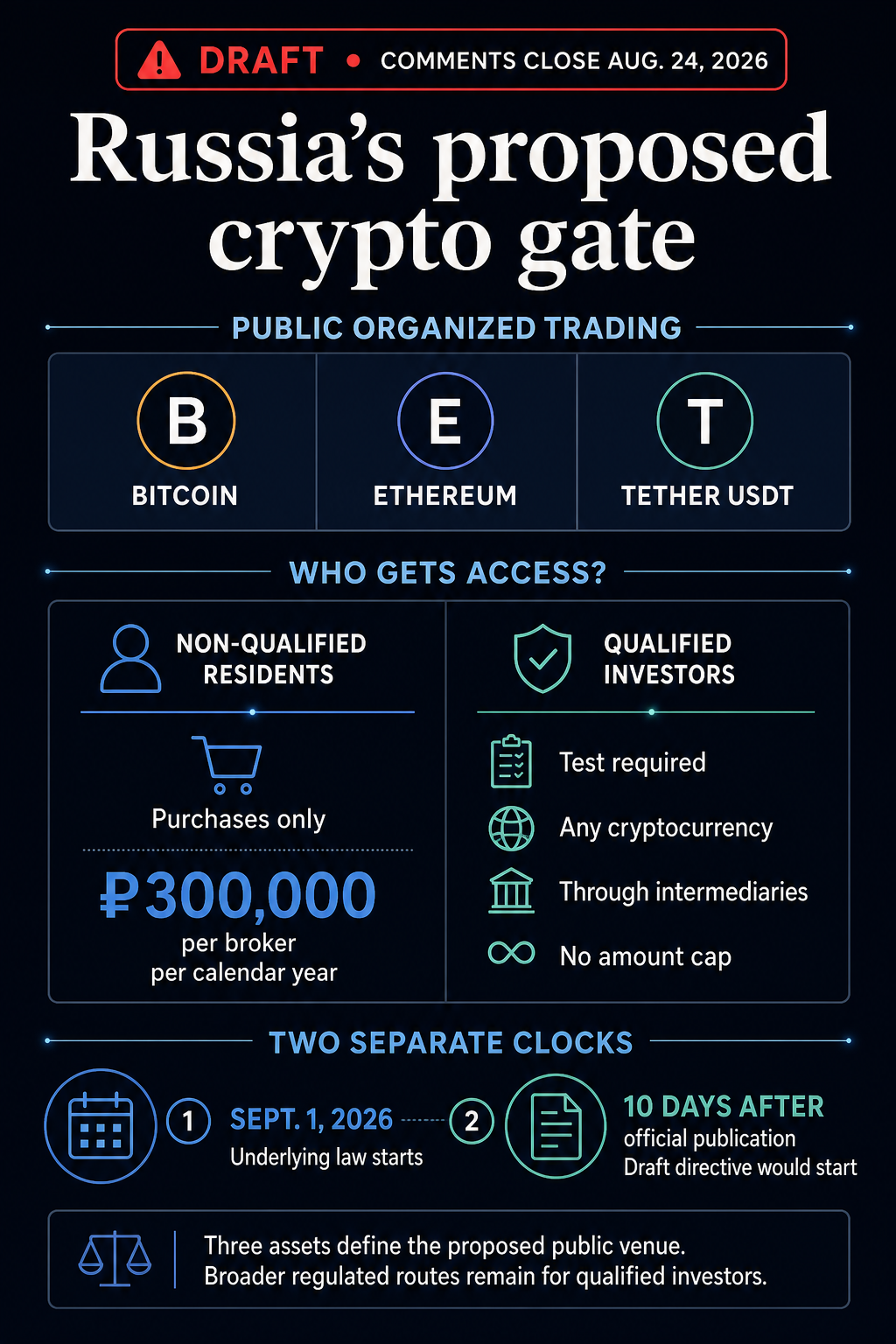
Under the draft directive, a Russian resident who is not a qualified investor could spend up to ₽300,000, nearly $58,000, on cryptocurrency through a single broker in a calendar year. The cap measures cumulative purchase costs through that broker.
That structure makes the broker the unit of the proposed ceiling. It also limits acquisitions: the directive’s formula totals the ruble cost of cryptocurrency purchases made for the client through the broker during the year.
The draft remains open for comments through Aug. 24, according to its explanatory note. The central bank can amend the three-asset appendix, cap, or other provisions before issuing a final directive.

Investor status changes the gate for Bitcoin, Ethereum, and USDT
Public organized trading of Bitcoin, Ethereum, and USDT would begin with the three assets in the appendix. Qualified investors have a wider regulated route under the framework described by the central bank.
In its overview of the underlying law, the Bank of Russia said that qualified investors must also pass a test, after which they may buy and sell any cryptocurrencies through intermediaries without a ceiling on the amount.
The overview places brokers and management companies alongside crypto exchanges and digital repositories within the planned market infrastructure, with organized trading available as a single transaction channel.
Crypto exchanges would buy and sell cryptocurrencies, while digital repositories would record rights to the assets. Brokers and management companies would provide additional routes for investor transactions, including access to organized trading.
The official summary separates admission to the public venue from the range of assets available to qualified investors through regulated intermediaries.

Russia’s underlying cryptocurrency market law is scheduled to take effect on Sept. 1, with the proposed directive taking effect 10 days after official publication. Its date and number remain blank while consultation continues, so the publication-triggered clock has yet to begin.
The overview of the law also describes a distinct channel for foreign trade. Exporters and importers may use any type of wallet or cryptocurrency for cross-border payments, either directly or through intermediaries. That provision concerns international settlement rather than domestic public-market admission.

The Aug. 24 deadline is the immediate decision point for the organized-trading gate. The current text assigns Bitcoin, Ethereum, and USDT to the public venue, grants tested, qualified investors broader intermediary access, and leaves the wording and publication date of the final directive unresolved.


