

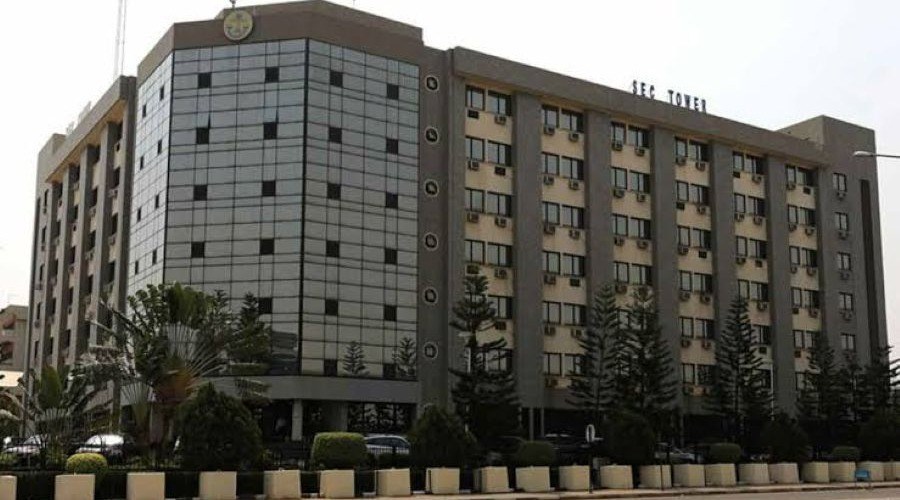
Nigeria’s Securities and Exchange Commission (SEC) unveiled an inaugural proposed framework on Tuesday tailored for CFDs and forex. This marks another push toward stricter oversight in another African nation. Notably, the SEC intends to ban binary options entirely while curtailing traditional finfluencer marketing tactics and setting strict 1:2 leverage limits on crypto.
Among others, the SEC is taking a direct strike at social media myth-making by explicitly outlawing the display of luxury lifestyles by executives and promoters whenever such imagery implies wealth was generated through retail trading.
This reflects a coordinated global trend reported by Finance Magnates, where watchdogs from Australia’s ASIC to New Zealand’s FMA are cracking down on social media content that is considered harmful or misleading.
Local Presence and Capital Requirements
The SEC’s proposed rules adopt the industry’s A-book/B-book terminology in the proposed licensed categories, and attach different capital requirements to them.
Brokers operating a B-Book market-maker model must maintain minimum paid-up capital of US$2 million (₦3 billion) or 10% of total liabilities. By contrast, A-book brokers require US$1.3 million (₦2 billion) or 10% of total liabilities.
The rules also required a fully operational Nigerian office, including at least two directors, as well as a CEO and Chief Compliance Officer who must reside in Nigeria, and at least 30% of equity must be held directly and continuously by Nigerian citizen directors.
New Leverage Limits and Operational Policing
The SEC’s new rulebook will cap major currency pairs at 1:400 leverage, while minor pairs, exotics, commodity CFDs and equity indices are restricted to 1:300. More interestingly, the regulator has clamped down hard on crypto, imposing a strict 1:2 leverage ceiling.
The regulator has also codified an exhaustive list of prohibited practices. Beyond the retail ban on binary options, it outlawed volume-linked deposit bonuses, trading rebates that induce excessive churn, and unfunded guaranteed stop-loss mechanisms. Brokers are also strictly prohibited from misrepresenting their execution architecture, such as claiming to route trades directly to the market while operating a dealing desk.
The jurisdictional perimeter is also now unambiguous: any offshore broker soliciting Nigerian residents, advertising locally, or handling domestic retail deposits without holding a Category-A license will be designated an illegal operator, exposing the firm and its executives to immediate blacklisting, administrative interdiction, and criminal prosecution under the ISA 2025.
The High Cost of Regulation
In recent years, Africa’s expanding retail trading population has driven significant structural evolution across the continent, as demonstrated by Nigeria’s proposed regulatory framework.
However, Africa remains a highly diverse market. According to Marc Boever, Pepperstone’s Head of EMEA, Africa, the region comprises dozens of unique trader profiles and distinct regulatory regimes, a factor that has prompted Pepperstone to expand its local presence and resource allocation.
While market growth and maturation drive increased supervisory focus, stricter regulation brings distinct challenges.
For example, South Africa’s Over-the-Counter Derivatives Providers (ODP) framework has drastically raised operational costs for retail brokerages due to rigorous oversight and stringent licensing criteria.
Nikolas Xenofontos, Managing Director at SALVUS Funds, pointed out that these heavy compliance demands make holding an ODP license in South Africa particularly expensive.
Consequently, the heightened burden has led to an industry pullback: out of 70 non-banking firms on the official register, 26 withdrew their applications and 4 surrendered their active licenses.
Nigeria’s Securities and Exchange Commission (SEC) unveiled an inaugural proposed framework on Tuesday tailored for CFDs and forex. This marks another push toward stricter oversight in another African nation. Notably, the SEC intends to ban binary options entirely while curtailing traditional finfluencer marketing tactics and setting strict 1:2 leverage limits on crypto.
Among others, the SEC is taking a direct strike at social media myth-making by explicitly outlawing the display of luxury lifestyles by executives and promoters whenever such imagery implies wealth was generated through retail trading.
This reflects a coordinated global trend reported by Finance Magnates, where watchdogs from Australia’s ASIC to New Zealand’s FMA are cracking down on social media content that is considered harmful or misleading.
Local Presence and Capital Requirements
The SEC’s proposed rules adopt the industry’s A-book/B-book terminology in the proposed licensed categories, and attach different capital requirements to them.
Brokers operating a B-Book market-maker model must maintain minimum paid-up capital of US$2 million (₦3 billion) or 10% of total liabilities. By contrast, A-book brokers require US$1.3 million (₦2 billion) or 10% of total liabilities.
The rules also required a fully operational Nigerian office, including at least two directors, as well as a CEO and Chief Compliance Officer who must reside in Nigeria, and at least 30% of equity must be held directly and continuously by Nigerian citizen directors.
New Leverage Limits and Operational Policing
The SEC’s new rulebook will cap major currency pairs at 1:400 leverage, while minor pairs, exotics, commodity CFDs and equity indices are restricted to 1:300. More interestingly, the regulator has clamped down hard on crypto, imposing a strict 1:2 leverage ceiling.
The regulator has also codified an exhaustive list of prohibited practices. Beyond the retail ban on binary options, it outlawed volume-linked deposit bonuses, trading rebates that induce excessive churn, and unfunded guaranteed stop-loss mechanisms. Brokers are also strictly prohibited from misrepresenting their execution architecture, such as claiming to route trades directly to the market while operating a dealing desk.
The jurisdictional perimeter is also now unambiguous: any offshore broker soliciting Nigerian residents, advertising locally, or handling domestic retail deposits without holding a Category-A license will be designated an illegal operator, exposing the firm and its executives to immediate blacklisting, administrative interdiction, and criminal prosecution under the ISA 2025.
The High Cost of Regulation
In recent years, Africa’s expanding retail trading population has driven significant structural evolution across the continent, as demonstrated by Nigeria’s proposed regulatory framework.
However, Africa remains a highly diverse market. According to Marc Boever, Pepperstone’s Head of EMEA, Africa, the region comprises dozens of unique trader profiles and distinct regulatory regimes, a factor that has prompted Pepperstone to expand its local presence and resource allocation.
While market growth and maturation drive increased supervisory focus, stricter regulation brings distinct challenges.
For example, South Africa’s Over-the-Counter Derivatives Providers (ODP) framework has drastically raised operational costs for retail brokerages due to rigorous oversight and stringent licensing criteria.
Nikolas Xenofontos, Managing Director at SALVUS Funds, pointed out that these heavy compliance demands make holding an ODP license in South Africa particularly expensive.
Consequently, the heightened burden has led to an industry pullback: out of 70 non-banking firms on the official register, 26 withdrew their applications and 4 surrendered their active licenses.


