


Japan’s JGB yield now at 30-year high
Global long-term bond yields are now at the highest level since the 2008 financial crisis as major long-dated sovereign bonds continued to sell off into trading on Tuesday.
The sell off comes only days after US Treasury Secretary Scott Bessent made headlines by announcing that the maximum size of debt buyback transactions would be increased to $4 billion from September.
While the Treasury does not conduct monetary policy, some commentators have compared this to a form of yield curve control. This has brought the debasement narrative, keenly followed by Bitcoin and precious metal investors, back into the spotlight.
Japan’s 10-year government bond yield surged to 3% for the first time since 1996 on Tuesday, while the 30-year JGB yield topped a record 4.18%. The 10-year US bond yield also surged to a new multi-year high and stands at 4.78% at the time of writing.
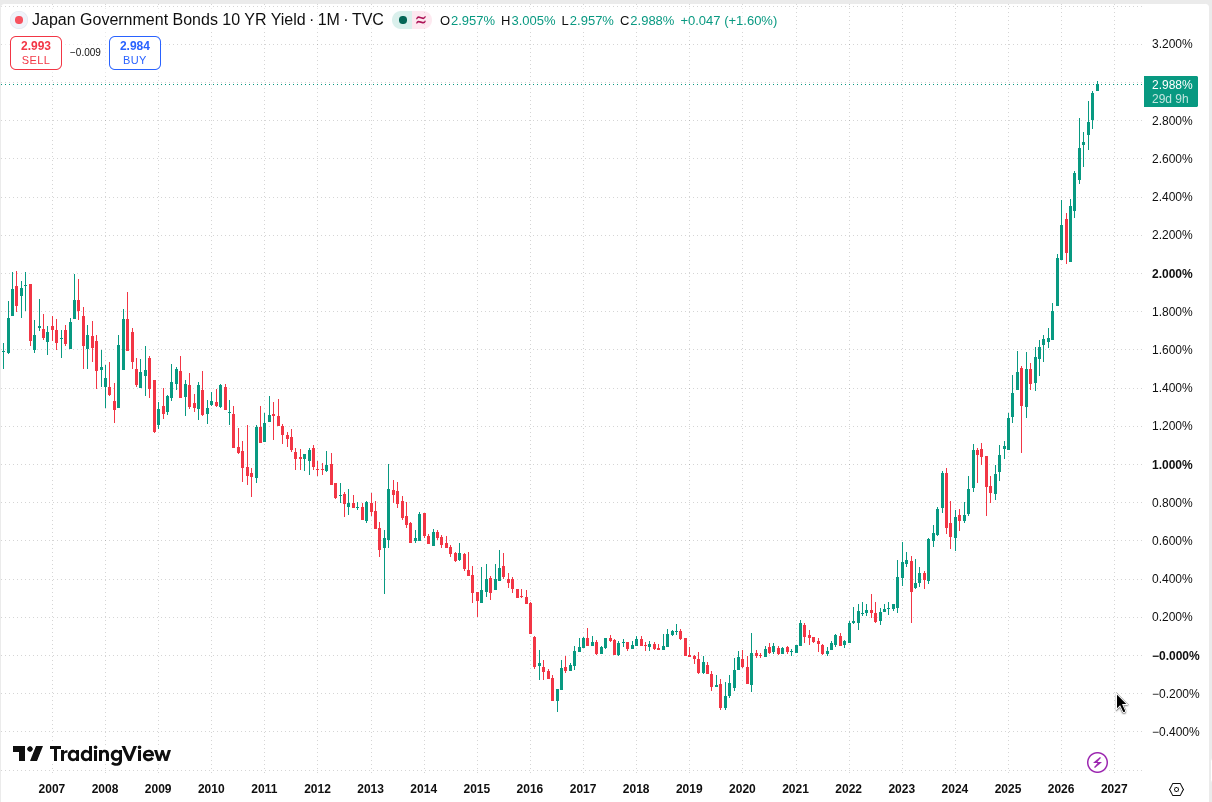
10-Year Japanese government bond. Source: TradingView
Officials in both countries face a mutual bind with respect to the Japanese yen: Tokyo can neither raise policy rates without incurring an operating loss that ultimately hits the Finance ministry, nor repatriate capital without divesting the Treasury securities on which Washington’s financing depends.
Industry commentators such as Arthur Hayes have argued for years that the Fed will eventually use its Foreign and International Monetary Authorities (FIMA) repo facility. Through this swap line, Japan’s Finance ministry could borrow dollars against its Treasury holdings and sell them for yen, strengthening the currency without causing an imminent sovereign bond crisis.
This mechanism would create new dollar liquidity, which is why Hayes recommends positioning in Bitcoin (BTC), gold and crypto. Treasury Secretary Scott Bessent hinted at the future use of the FIMA facility in August.
Rising long-term yields may be the first sign that Hayes’s scenario is being priced in. Robin Brooks, senior fellow at the Brookings Institution commented on X: “For the past two years, Japan has been in a “Liz Truss” bond market crisis whereby its currency falls even as government bond yields go ever higher. We’ve never had a major G10 sovereign experience something like this and it’s deeply destabilizing…”
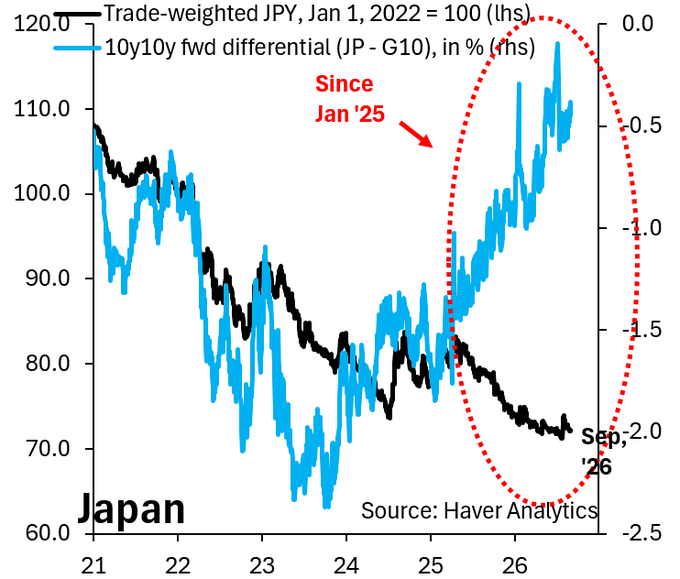
10-year interest swap rate and trade-weighted JPY.
Source: Robin Brooks on X.com
Bitcoin continues sideways movement
In the face of Tuesday’s bond sell-off, Bitcoin has been trading sideways near the $78,000 mark, following a minor corrective decline from its morning high close to $79,000.
Cointelegraph previously reported on a thick patch of resistance between the current spot price and $86,000. This has slowed Bitcoin’s upside momentum despite positive news and renewed interest in the debasement trade.
Related: Bitcoin faces true demand test above $83K as liquidity thickens: Glassnode
Overall sentiment across recent reports remains mixed to cautiously optimistic in the short term after the strong August recovery, with the $76,000-$82,000 range as the key battleground for the coming weeks.
S&P 500 index futures sold off by 0.3% on Tuesday and the gauge now hovers around 7,660, the lowest level since Aug. 4. This comes as tensions in the Iran war flare up once more. Oil prices rose more than 2%, with WTI around $88 per barrel and Brent above $92, fueled by renewed US-Iran fighting, including strikes, tanker incidents in the Strait of Hormuz, and comments from President Donald Trump.
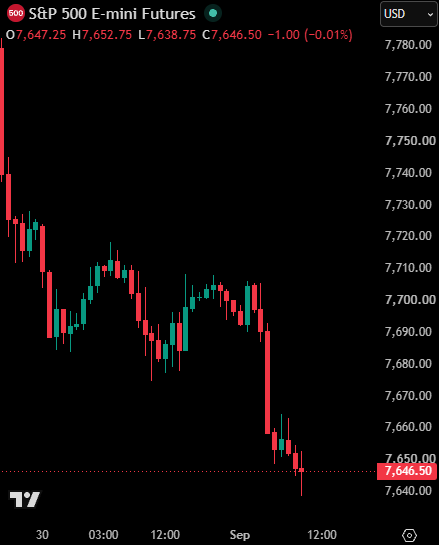
S&P 500 out-of-hours futures. Source: X.com


