

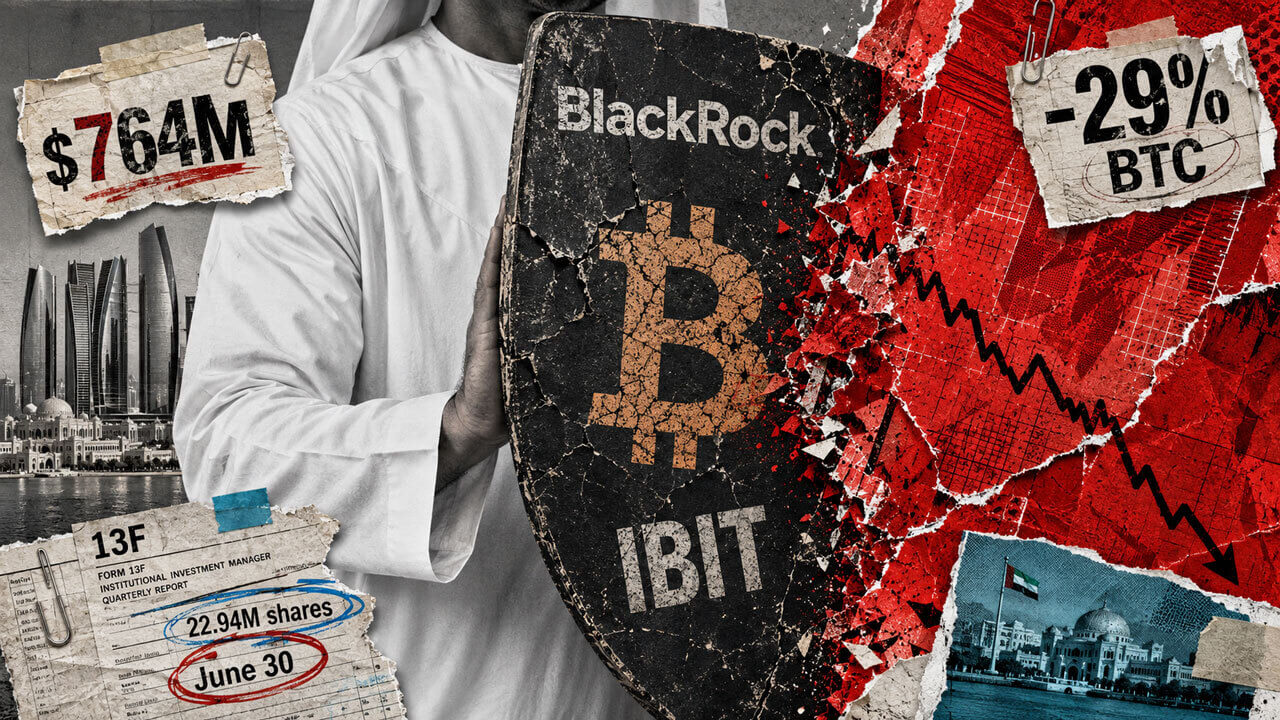
Two Abu Dhabi sovereign investors kept their BlackRock Bitcoin ETF holdings unchanged through the second quarter, retaining $764 million of exposure even as the cryptocurrency remained mired in one of its steepest annual declines.
Mubadala Investment Company and the Abu Dhabi Investment Council held a combined 22.94 million shares of BlackRock’s iShares Bitcoin Trust ETF (IBIT) as of June 30, regulatory filings show.
Neither reduced its share count during the quarter.
The decision meant the funds absorbed the decline in IBIT. Their combined positions were valued at about $881.4 million at the end of March, implying roughly $118 million of value was erased during the second quarter even though the number of shares remained unchanged. Mubadala’s stake alone fell in reported value to $490.1 million from $565.6 million.
Mubadala held 14,721,917 IBIT shares as of June 30, the same amount it owned three months earlier. The position remained its second-largest reported holding in its $34.8 billion 13F portfolio, behind GlobalFoundries.
The sovereign investor had increased its position by almost 16% during the first quarter, adding more than 2 million shares as Bitcoin weakened. It had previously boosted the stake by about 46% in the final quarter of 2025.

Abu Dhabi Investment Council (ADIC) also stood pat, retaining 8,218,712 IBIT shares worth about $273.6 million as of June 30. IBIT was its largest reported US-listed position, accounting for over 33% of its roughly $715 million 13F portfolio.
ADIC began reporting the position directly earlier this year after its subsidiary Al Warda Investments had previously disclosed the stake. The reporting change did not alter the beneficial ownership of the shares.
Bitcoin slides
The unchanged positions stand out against Bitcoin’s performance this year.
Bitcoin traded near $62,900 on Friday, down about 29% from roughly $88,700 at the start of 2026. The cryptocurrency has also fallen by roughly half from the record above $126,000 reached last October.
BlackRock data show IBIT was down 27.6% this year through Aug. 13, with net assets falling to about $47.35 billion. Its shares closed at $35.88 Thursday.
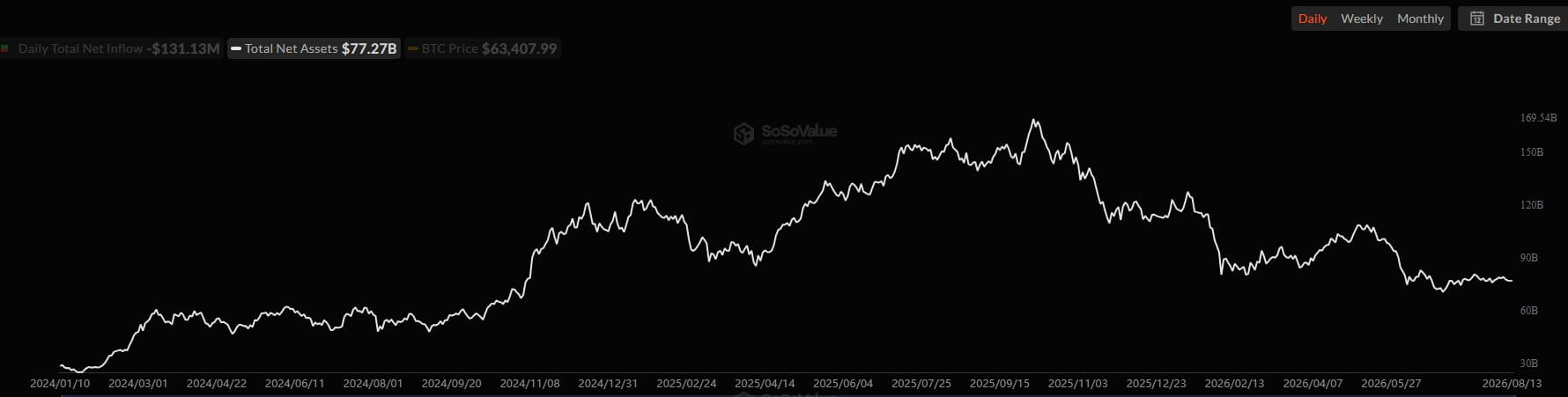
The broader ETF market reflects this retreat, with Bitcoin ETFs shedding around $40 billion in assets under management, from more than $116.7 billion to around $95.5 billion, according to data from SoSoValue.
That means the Abu Dhabi investors have so far responded differently from institutions that have used the downturn to cut exposure.
Harvard University, for example, reduced its IBIT position by 43% during the first quarter after already trimming it late last year. Mubadala increased its holdings during that same period, while ADIC kept its stake unchanged.
Michael Tanguma, chief executive of Onramp Bitcoin, said Abu Dhabi may also hold Bitcoin directly in cold storage, arguing that relying exclusively on an ETF structure would be unusual for a sovereign investor seeking long-term exposure.
Form 13F disclosures cover specified US-listed securities and would not reveal Bitcoin held directly in sovereign-controlled wallets, meaning the filings neither confirm nor rule out Tanguma’s assertion.
Abu Dhabi deepens its crypto push
These funds’ decision to maintain their Bitcoin positions comes as Abu Dhabi builds a broader institutional presence across digital assets, spanning regulation, venture investment, tokenization and crypto infrastructure.
Abu Dhabi Global Market, the emirate’s international financial center, has operated a dedicated virtual-asset regulatory framework since 2018 and said late last year that more than 20 regulated firms were licensed to conduct activities involving virtual assets or fiat-referenced tokens.
Binance received a global license under the framework in December, while Coinbase secured regulatory approval this week to establish an international tokenization hub in Abu Dhabi.
State-linked capital has moved alongside that regulatory expansion. Abu Dhabi-backed MGX agreed last year to invest $2 billion in Binance, one of the largest institutional investments ever made in a crypto company.

Separately, Hub71, Abu Dhabi’s government-backed technology ecosystem, established a dedicated digital-assets program with more than $2 billion of capital committed to Web3 and blockchain startups.
Mubadala itself has also expanded beyond simply owning Bitcoin through an ETF. Its asset-management arm, Mubadala Capital, moved one of its private-market funds onchain in July, making the strategy available in tokenized form across Base, Solana and Sui.
Those initiatives show an Abu Dhabi investment strategy that has increasingly treated digital assets as part of its financial infrastructure rather than solely as a speculative trade.


