

Rate Signals Come Out in the Wa(r)sh
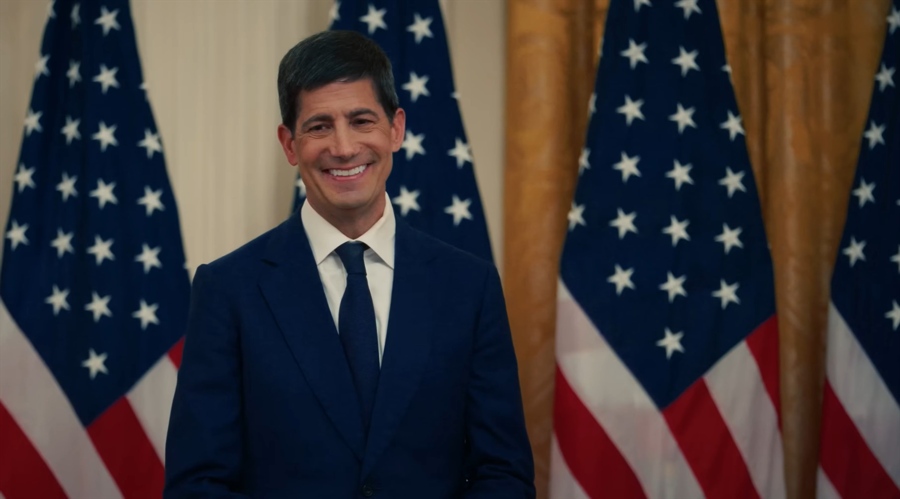
It is fair to say that there was a degree of trepidation in financial markets when Donald Trump named his nominee to serve as the chair of the Federal Reserve in succession to Jerome Powell earlier this year.
A former Fed governor, Kevin Warsh, had been on Trump’s radar since his first term and was widely expected to toe the line on interest rates – unlike his predecessor, who was publicly attacked by POTUS for not cutting rates with sufficient alacrity.
The new man at the top had been a harsh critic of the central banking system, suggesting that ‘regime change’ was required and that concerns around inflation had not been taken sufficiently seriously.
However, his reputation as a hawk suggested he would look to raise rates, and Trump’s comments on social media that he would be remembered as one of the best – if not the very best – chairmen of the Fed seemed at odds with the former’s desire to see them fall.
BREAKING:The new Fed Chair signaled a major shift.Kevin Warsh says QE is fueling inflation.”The Fed should exit markets outside of crises.”This is not Powell talking.Powell printed. Warsh wants to stop.Powell expanded the balance sheet. Warsh wants to shrink it.… pic.twitter.com/DmIJmsc4Hy
— Crypto Tice (@CryptoTice_) June 29, 2026
There are some economists who don’t agree with Warsh’s view that the central bank should reduce its balance sheet to bring down short-term interest rates. But it appears that his previous warnings around inflation are buying him time with a president who, as recently as last week, reiterated his desire for a rate cut.
The new chairman’s first Federal Open Market Committee meeting ended with a decision to leave interest rates unchanged while suggesting that they could be raised before the end of 2026.
With inflation running at around twice the Fed’s target level, senior figures such as White House trade advisor Peter Navarro have expressed the view that maintaining current interest rate levels makes sense.
Meanwhile, Trump has been putting out his usual mixed messages, stating that he wants the Fed chair to be totally independent while repeating his claim that the US needs low interest rates. “Low interest rates will solve everything, will solve that now,” he told an Oval Office event last week.
Warsh has made a good impression so far. Whether this honeymoon period lasts will depend on his ability to stand his ground against the man residing at 1600 Pennsylvania Avenue.
Investors Warned Not to ‘Keep Politics Out of It’
Investors have long since accepted that volatility is a reality of financial markets. But analysts have found it difficult to price risk created by geopolitical events, partly because these events have been viewed as a series of one-off occurrences rather than a continuum.
In a more fragmented, multipolar world, multinational institutions no longer function as reliably as they once did, and stability has eroded.
Passive investment strategies were well-suited to a world of low geopolitical risk, central bank balance sheet abundance and compressed volatility. But that world is gone. In its place is an environment that distributes risk unevenly, creating distinct winners and losers across countries, sectors and asset classes.
That is the view of investment manager PIMCO, which reckons that dispersion requires the ability to rotate, adjust and exploit dislocations.
As Pramol Dhawan, the firm’s head of emerging markets portfolio management, observes, geopolitical volatility doesn’t affect all countries or asset classes equally. Broader market performance – or beta – matters less when winners and losers are increasingly distinct.
For example, a comparison between the economic impact of the Russian invasion of Ukraine and the US-Iran conflict reveals that while the former event hit a post-pandemic global economy marked by pent-up imbalances, where bond yields were near all-time lows, bond yields are much higher today than in 2022. As a result, even during recent stress, fixed income has demonstrated a greater ability to absorb shocks.
To strengthen resilience, investors are advised to construct portfolios to adapt to both episodic shocks and structural shifts in a more geopolitically driven market environment.
Over short time horizons, particularly during bouts of stress, correlations across asset classes can appear skewed and diversification may seem elusive. Yet, when portfolios are built for long-term resilience, diversification can reassert itself.
SpaceX – Moonshot or Pie in the Sky?
You’ve got to hand it to Elon Musk. While a significant percentage of the world’s population sees him as a politically divisive figure who has gotten rich from the work of others, there are many who view him as a technology visionary.
If the valuation of SpaceX is anything to go by, a large number of investors seem to fall into the latter category. While the share value of his space technology firm may have slipped from its mid-June peak, its current level still values the business at around $2.25 trillion.
HERE IS THE FULL SPACEX $SPCX SHARE UNLOCK TIMELINERight now only 4.9% of shares are in the free float.Here is how that changes over the next 14 months:Early unlock window (Jul – Dec 2026):Aug 8: 11.8%Aug 20: 15.2%Sep 9: 17.7%Sep 24: 20.1%Oct 9: 22.6%Oct 24: 25.1%… https://t.co/DTcP1SfDy2 pic.twitter.com/jhh9icGFZW
— Evan (@StockMKTNewz) June 20, 2026
The fact that SpaceX has been massively overvalued based on what it has actually delivered to date is seen by some as an example of a company whose stock price has been inflated by its ability to raise capital and tap into the vision of an AI-led future economy, as well as a willingness to believe in Musk’s ability to replicate his success in the electric and autonomous vehicle market.
But if the total addressable market for the services of the various companies that operate under its umbrella is really the $28.5 trillion, as its founder states, the potential for growth is clear.
Related: SpaceX Stock Tumbles 32% From Peak as Thin Float Whipsaws New Traders
While concepts such as orbital AI data centres (advanced computing facilities that float in space to power artificial intelligence) might seem fanciful, the same could have been said about using drones to deliver packages when Amazon went public in 1997.
This is a valid comparison in more ways than one, given that Amazon paved the way for IPOs of unprofitable technology firms. While the e-commerce marketplace generated revenues close to $150 million when its listing valued the business at approximately $438 million, it ended up losing almost $28 million that year.
However, if SpaceX is to enjoy similar success, it will have to ensure that core services such as high-speed broadband and satellite launches generate significant revenues. After all, shareholders don’t care if there is life on Mars…
This article was written by Paul Golden at www.financemagnates.com.
Source link


