


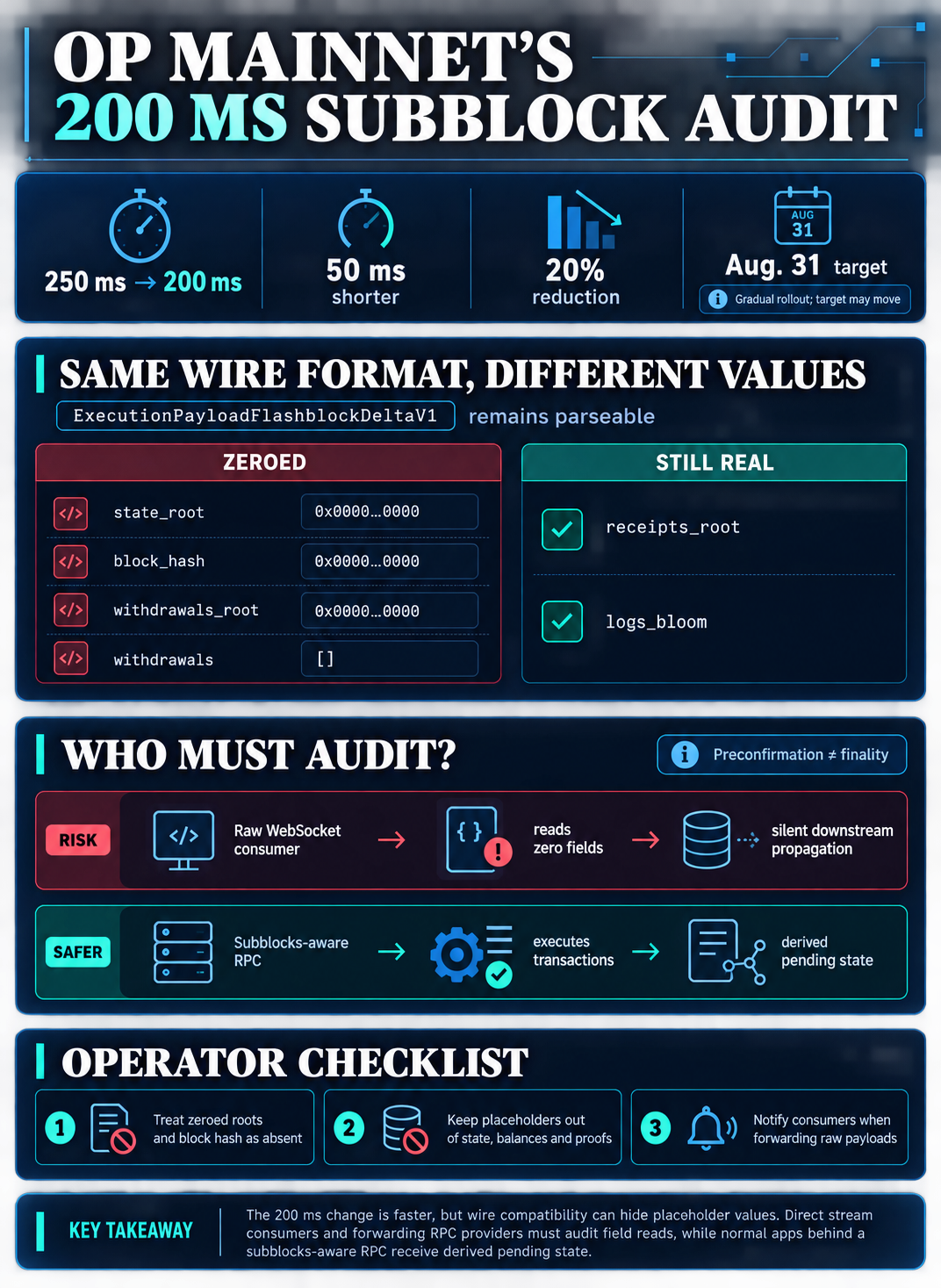
Optimism is targeting 200 ms subblocks on OP Mainnet, cutting the preconfirmation interval from 250 milliseconds in a rolling change targeted for Aug. 31. Subblocks, formerly called Flashblocks, are incremental updates the sequencer sends while it is still building a normal block, giving apps feedback before that block is sealed.
The 20% speedup carries a quiet compatibility risk. Optimism’s migration notice says four fields will remain in each streamed payload but stop carrying usable data: state_root, block_hash and withdrawals_root will be all-zero values, while withdrawals will be an empty list.
The payload type remains ExecutionPayloadFlashblockDeltaV1, so software can continue parsing the stream without raising an error. Fields including receipts_root and logs_bloom will still contain real values. That combination makes the migration easy to miss in systems that treat successful decoding as proof that every field is meaningful.
Why 200 ms subblocks make the provider boundary matter
Subblocks are preconfirmations, not finalized blocks or state commitments. Optimism’s technical explainer says direct stream consumers should treat the zeroed state root and block hash as absent and derive preconfirmed state by executing the transactions carried by the stream.
Most applications sit on the safer side of that boundary. They connect to a subblocks-aware RPC provider and use standard Ethereum methods, often with the pending tag. A correctly configured provider or node maintains its own state view, so calls such as eth_getBalance can return derived preconfirmed data without relying on a usable state root in the raw payload, according to Optimism’s integration guide.
The audit therefore falls most directly on applications that ingest the WebSocket stream themselves and on RPC providers that forward raw fields to customers. Operators need to find reads of the four affected fields, treat the placeholder roots and block hash as unavailable, and prevent those values from entering downstream state, balances or proof inputs. Providers relaying raw payloads must also notify their consumers.
The faster cadence is already visible in provider documentation. Alchemy’s OP Mainnet guide describes 200 ms updates through existing Optimism RPC endpoints, while QuickNode’s notice applies the migration to its Optimism Mainnet and Sepolia JSON-RPC components.
Optimism says the Aug. 31 target for 200 ms subblocks may move and that the rollout is gradual, so there is no documented network-wide completion time. Its status page showed systems operational and no recent incident notice when checked. The official and provider notices frame the zero-valued fields as a migration risk requiring preventive work, not as evidence that balances or proofs have already been corrupted.


