


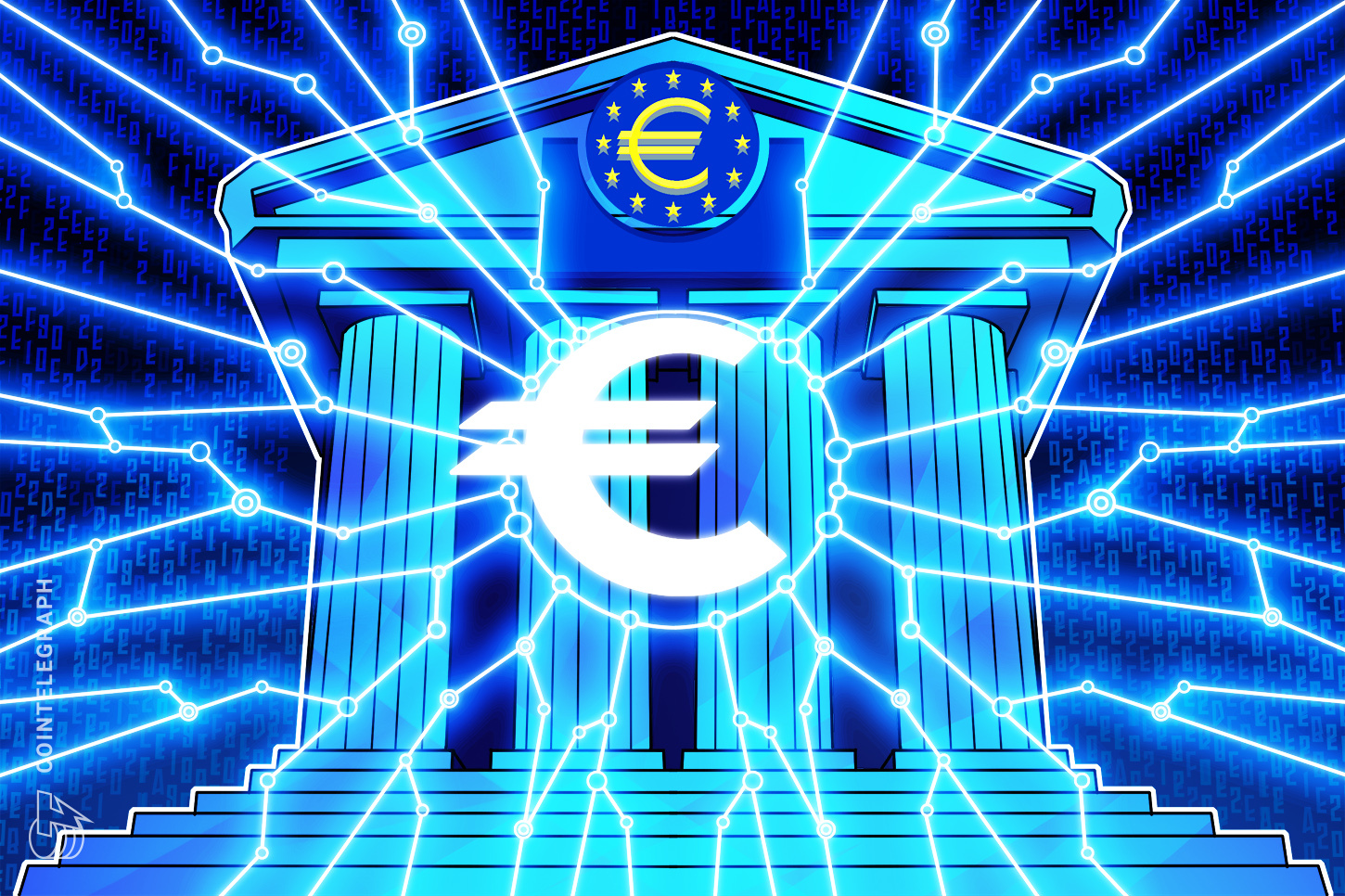
The European Central Bank (ECB) is defending the privacy design of its planned central bank digital currency (CBDC).
In an Aug. 10 interview published Monday, ECB Executive Board member Piero Cipollone said the digital euro’s design would limit the amount of transaction information available to the central bank.
“The Eurosystem would not be able to identify the users making or receiving payments,” Cipollone said.
Cipollone said only banks involved in transactions would be able to identify users, including for anti-money laundering purposes, while the Eurosystem would not be able to directly link specific individuals to digital euro payments. Meanwhile, offline digital euro transactions would allow payment details to be available only to the payer and payee.
Despite the ECB’s efforts to quell privacy concerns over the planned digital euro, lawmakers, privacy advocates and crypto community members have warned that government-issued digital currencies could expand financial surveillance.
In the US, President Donald Trump prohibited federal agencies from developing or promoting a CBDC in January 2025, citing risks to financial stability, individual privacy and US sovereignty. House lawmakers have separately advanced the Anti-CBDC Surveillance State Act, which seeks to prohibit the Federal Reserve from issuing a CBDC.
Related: ECB picks 36 payment providers to test digital euro ahead of 2027 pilot
Digital euro pitched as payment sovereignty tool
Beyond privacy, the ECB has presented the digital euro as part of Europe’s effort to strengthen its payments infrastructure and reduce reliance on non-European payment providers.
In an April public lecture held in Latvia, Cipollone said that Europe’s reliance on non-European payment providers creates a strategic vulnerability. He said two-thirds of euro-area card transactions are governed by non-European companies, and that the digital euro could reduce that dependence and provide European-controlled payment infrastructure.
The European Parliament’s Economic and Monetary Affairs Committee backed its position on the digital euro legislation in June, while lawmakers later cleared the proposal for negotiations with the Council in July.
The ECB has said a digital euro could be issued as early as 2029, provided the necessary legislation is adopted and the project clears its remaining technical and operational stages.
Magazine: The digital euro: Surveillance money, or a better alternative to cash?


